
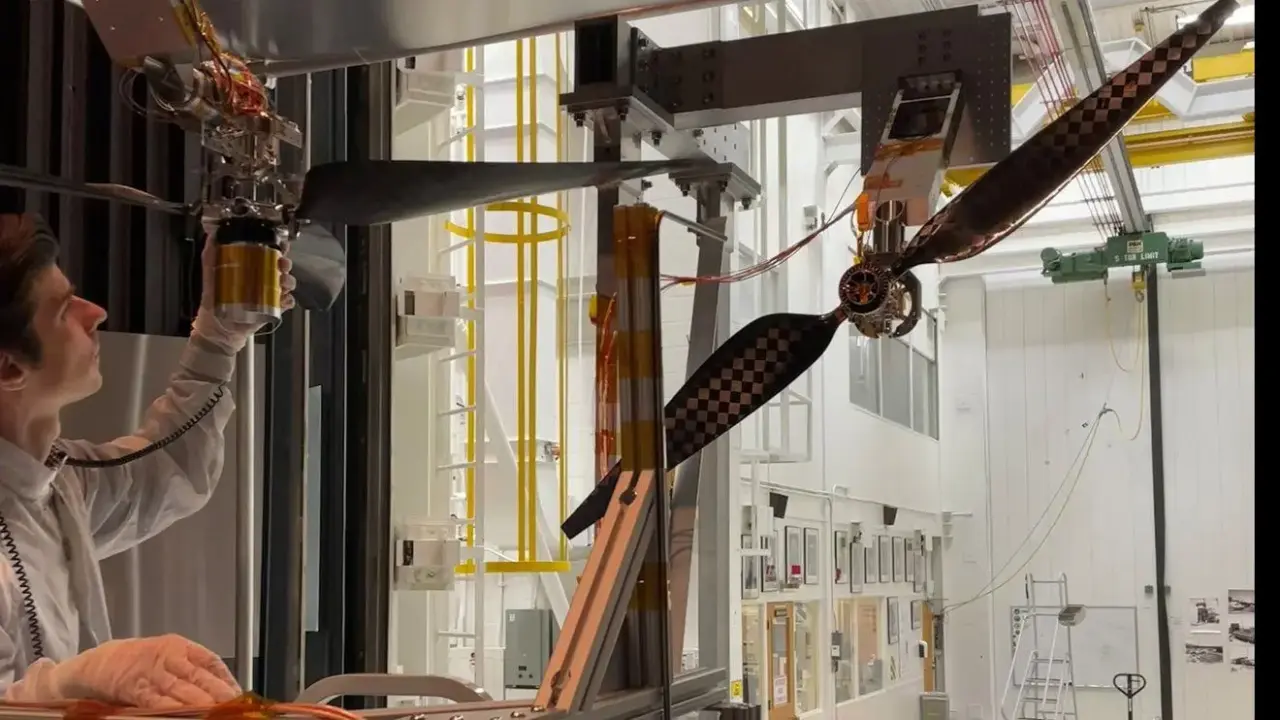
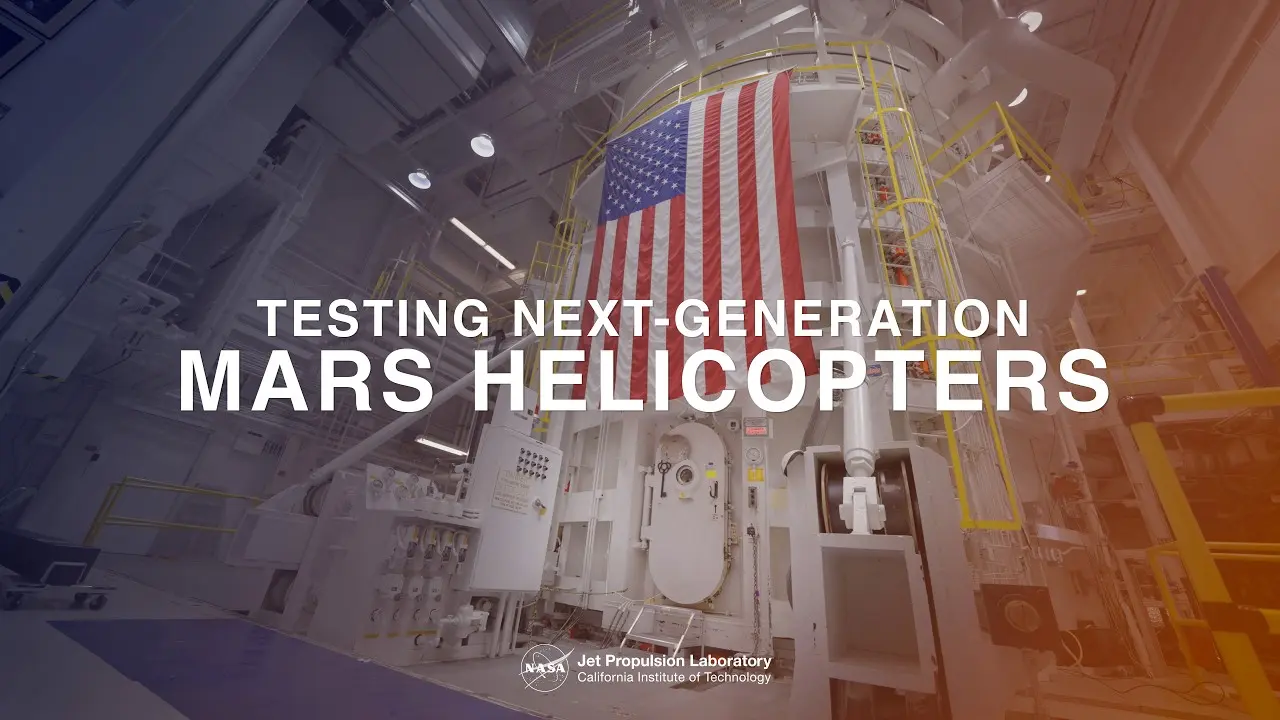
NASA has successfully tested rotor blades for its next-generation Mars helicopters, pushing them past the speed of sound for the first time. The tests were conducted at the Jet Propulsion Laboratory's 25-Foot Space Simulator.
Supersonic rotor test at JPL
A two-bladed rotor reached a tip speed of Mach 1.08, while a three-bladed rotor hit Mach 0.98. The rotors spun at up to 3,750 RPM, roughly ten times faster than typical Earth helicopter rotors. For comparison, the Ingenuity Mars Helicopter operated with tip speeds around Mach 0.7.
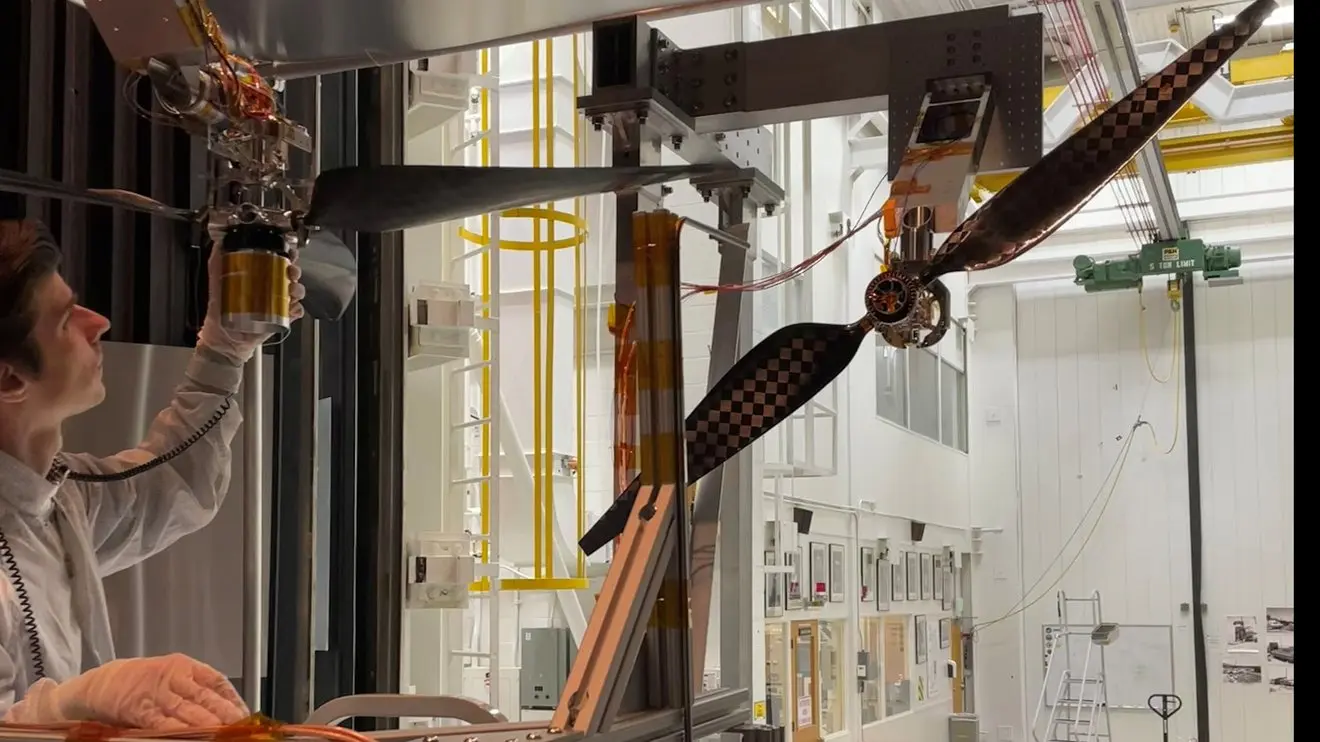
The new rotors are part of Project SkyFall, a mission targeted for December 2028. SkyFall will deploy three next-generation Mars helicopters. NASA aerodynamicist Shannah Withrow-Maser said the team expected to reach Mach 1.05 but achieved Mach 1.08 on the final runs, adding that there may be even more thrust available.
Al Chen, Mars Exploration Program manager at JPL, noted that while Ingenuity had a great run, these next-generation aircraft are being asked to do even more on Mars. Flying on Mars is extremely difficult due to its thin atmosphere and significant gravity. The successful rotor tests are a major step toward proving flight in more demanding environments.


Discussion
0 comments
Log in to join the thread with a thoughtful take, question, or correction.