
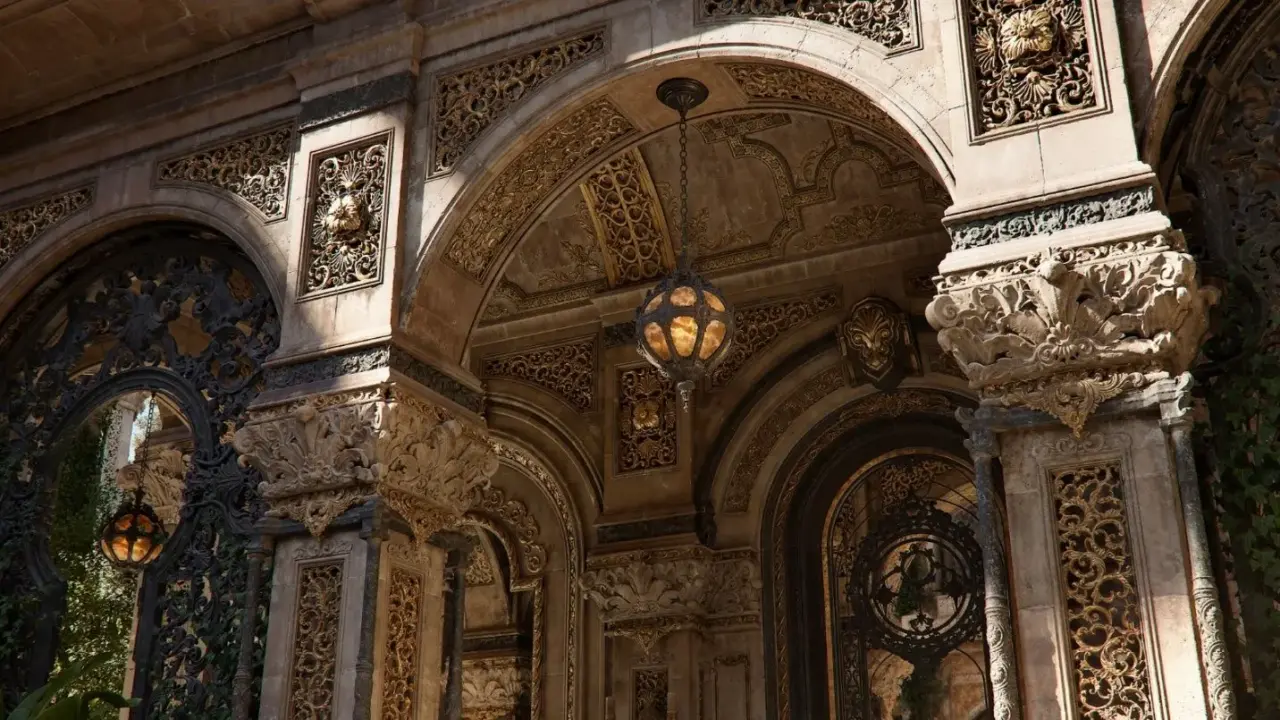
Nvidia announced RTX Mega Geometry at GDC 2026. The company plans to implement the technology in upcoming 2026 titles. Confirmed games include Control Resonant and The Witcher 4.
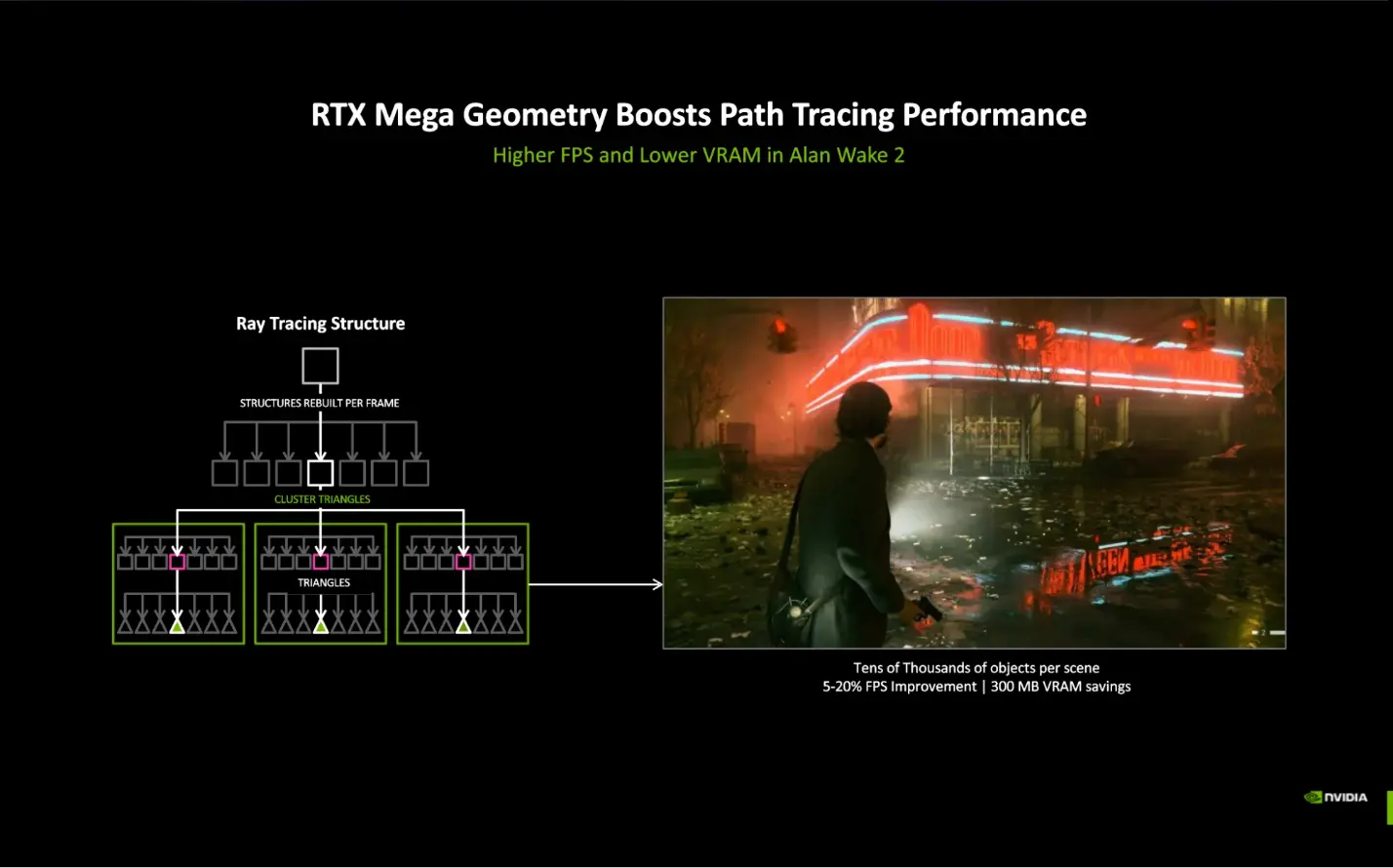
Testing in Alan Wake 2 showed approximately 1 GB of VRAM savings and a 13% performance increase
The technology uses Cluster Acceleration Structures to optimize bounding volume hierarchy rebuilding. This approach reduces CPU overhead during rendering. The RTX 50-series Blackwell GPUs feature dedicated hardware engines for triangle cluster intersection and compression.
Spec comparison
| Spec | RTX 20-series | RTX 50-series |
|---|---|---|
| Supported GPU Architectures | Software support | Blackwell hardware acceleration |
| RT Cores | Third-generation | Fourth-generation |
| Ray-triangle intersection rate | Baseline | Doubled |
| VRAM reduction (dense geometry) | N/A | Several hundred megabytes |
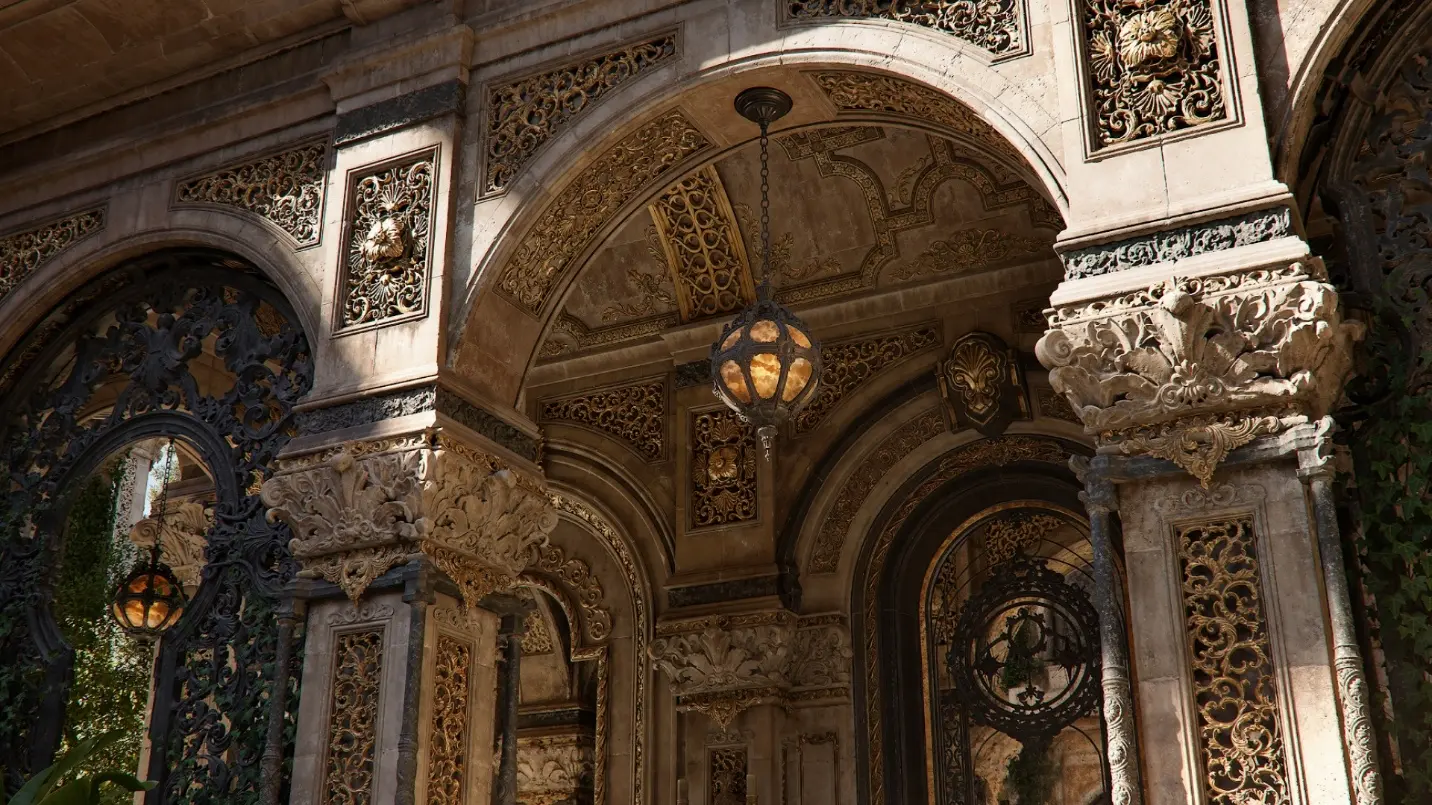
Testing in Alan Wake 2 showed approximately 1 GB of VRAM savings. The same test recorded a 13% performance increase at both native 4K and 4K with DLSS Quality. On the RTX 5090, enabling the feature costs 23% of performance at 1080p, 24% at 1440p, and 21% at 4K.
The RTX 50-series doubles the ray-triangle intersection rate compared to third-generation RT Cores. Nvidia claims the technology reduces VRAM usage by several hundred megabytes when ray tracing dense geometry. The RTX Bonsai Diorama Demo demonstrates full-fidelity Nanite mesh path tracing with reduced artifacts.
Nvidia announced the technology for 2026 titles. The company has not confirmed specific launch windows for individual game implementations.

Discussion
0 comments
Log in to join the thread with a thoughtful take, question, or correction.