
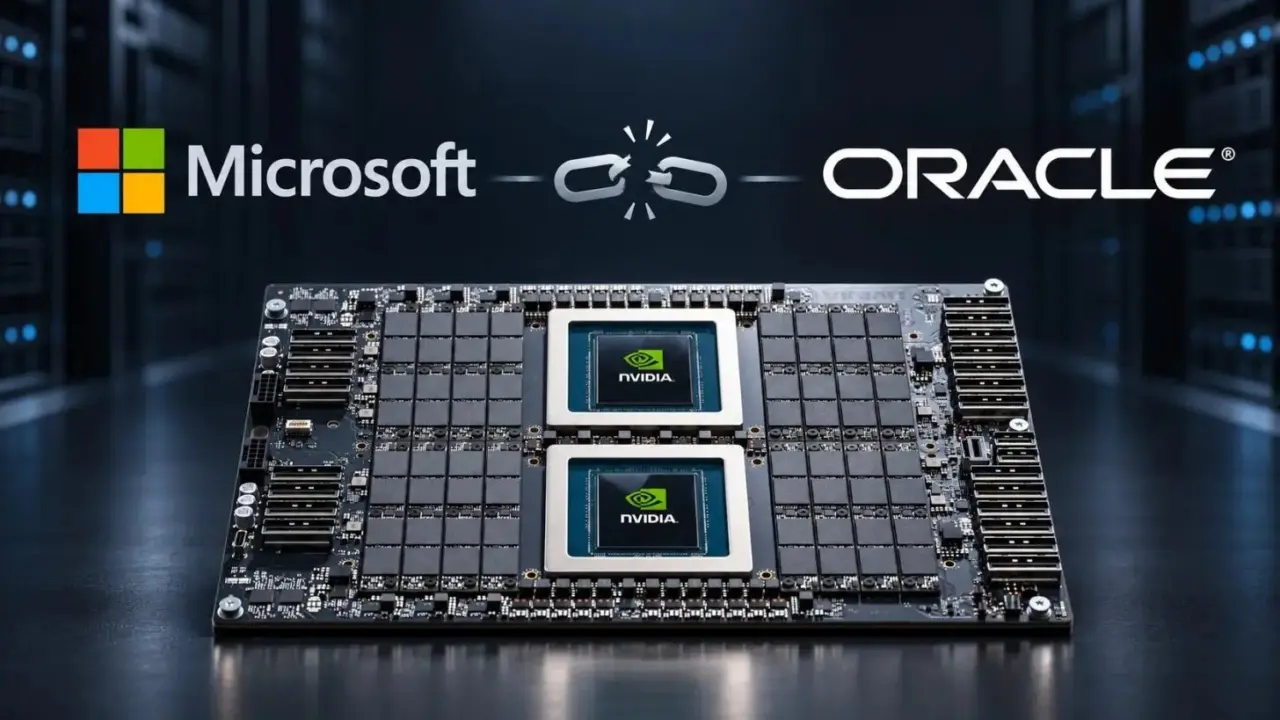
Microsoft is ending its AI computing contract with Oracle Cloud Infrastructure, a move that highlights the rapid pace of hardware obsolescence in the enterprise AI sector. This termination signals that older GPU generations are losing value to cloud providers much faster than traditional IT cycles suggest. Buyers and investors should watch how this impacts the secondary market for data center hardware and the pricing power of next-generation chips.
Oracle maintains 97.9% utilization for older chips while Microsoft shifts to newer hardware
The decision centers on Microsoft's need to run Bing's AI inference workloads more efficiently. Oracle's older generation NVIDIA GPUs no longer meet the company's evolving performance requirements for these tasks. Microsoft is shifting its strategy toward newer, more capable hardware to maintain search and AI service quality.
Oracle reported a 121% year-over-year increase in cloud infrastructure revenue to $7.4 billion for the first quarter of fiscal 2027. Despite this revenue growth, the company posted a $5 billion negative free cash flow during the same period. The firm stated that demand for previous-generation GPUs remains robust, citing a 97.9% utilization rate for these older chips.
Oracle plans to renew capacity for these older GPUs at a 20% premium, betting on continued demand from other customers. Microsoft and Oracle will still maintain other parts of their partnership, such as Oracle Database@Azure. The exact GPU models involved and the specific contract amounts remain undisclosed by either company.
This split underscores the intense competition for the latest AI acceleration hardware among major cloud providers. It also demonstrates how quickly older enterprise silicon can become economically unviable for the most demanding workloads. The industry will likely see more such contract adjustments as AI models grow more complex.
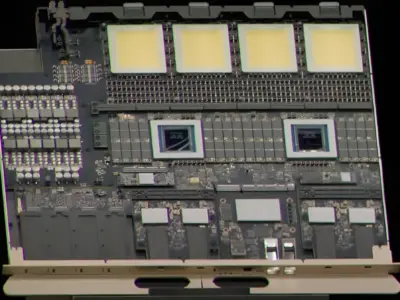
Oracle is charging a 20 percent premium to keep the older silicon running. That is a massive margin given the negative free cash flow they reported. The hardware is clearly still viable for general workloads but not for Bing inference. It proves that inference workloads are outpacing the compute density of the current generation faster than expected.
Are we sure the older chips are the bottleneck here or is it just memory bandwidth? I have not seen any independent benchmarks comparing the new inference throughput against the previous generation. Without that data we are just guessing about the obsolescence curve.