
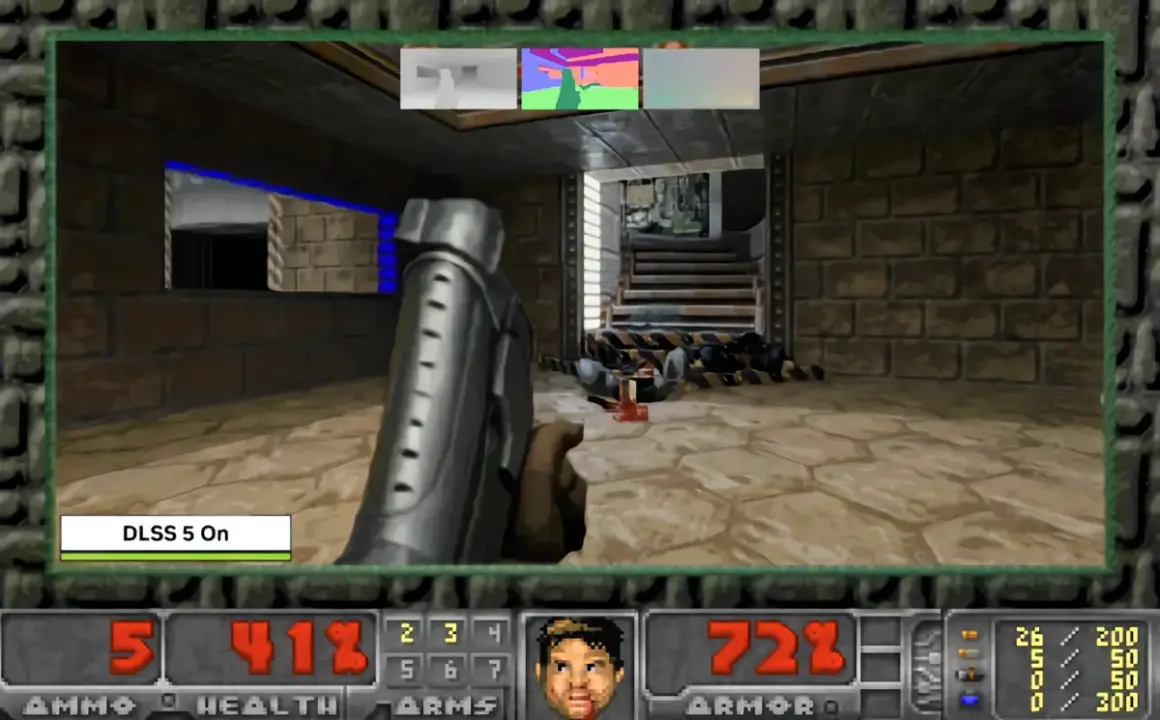
A developer has retrofitted a 30-year-old classic with cutting-edge rendering technology, proving that legacy codebases can interface with modern graphics pipelines. This experiment matters because it demonstrates the flexibility of current neural rendering standards when applied to vintage software architectures. It serves as a technical showcase rather than a practical upgrade for everyday gamers.
Custom engine generates depth and motion maps for modern upscaling
Developer Nikolai Zhivotenko created a Windows x64 port of the 1993 DOS game Doom based on the Linux Doom 1.10 source code. The project restructures the game's rendering path to utilize DirectX 12 instead of the original engine's legacy graphics calls. This modernization allows the game to run on contemporary operating systems without relying on compatibility layers.
The custom engine maintains an internal resolution of 320×200 pixels to preserve the original visual style. It outputs the final image through a 1280×800 DirectX 12 window. The system generates depth, normal, and motion data for every frame, which are critical inputs for NVIDIA DLSS 5 neural rendering. Players can also choose alternative upscaling methods like AMD FSR 2.2 or Anime4K if they prefer different visual results.
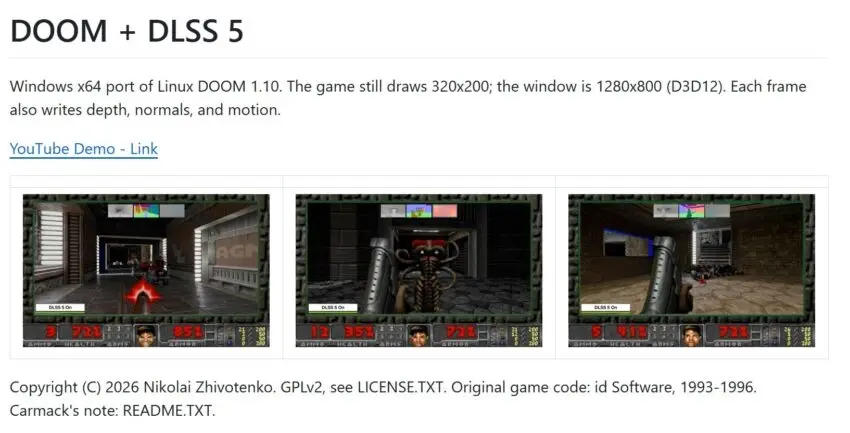
This modification highlights the technical feasibility of integrating old architecture with modern graphics buffers. The visual output may appear incongruous because the low-resolution pixel textures clash with the smooth upscaling of DLSS 5. The source code is available on GitHub for those interested in the implementation details. Standard Steam versions of the game are not compatible with this specific mod.
Kuai Keji described the project as more about the stunt than practicality. The mod was released globally on October 6, 2024. This release follows previous community efforts to repurpose the Doom engine, such as running the game in SQL databases. The project stands as a unique intersection of retro gaming and modern graphics technology.
Discussion
0 comments
Log in to join the thread with a thoughtful take, question, or correction.