
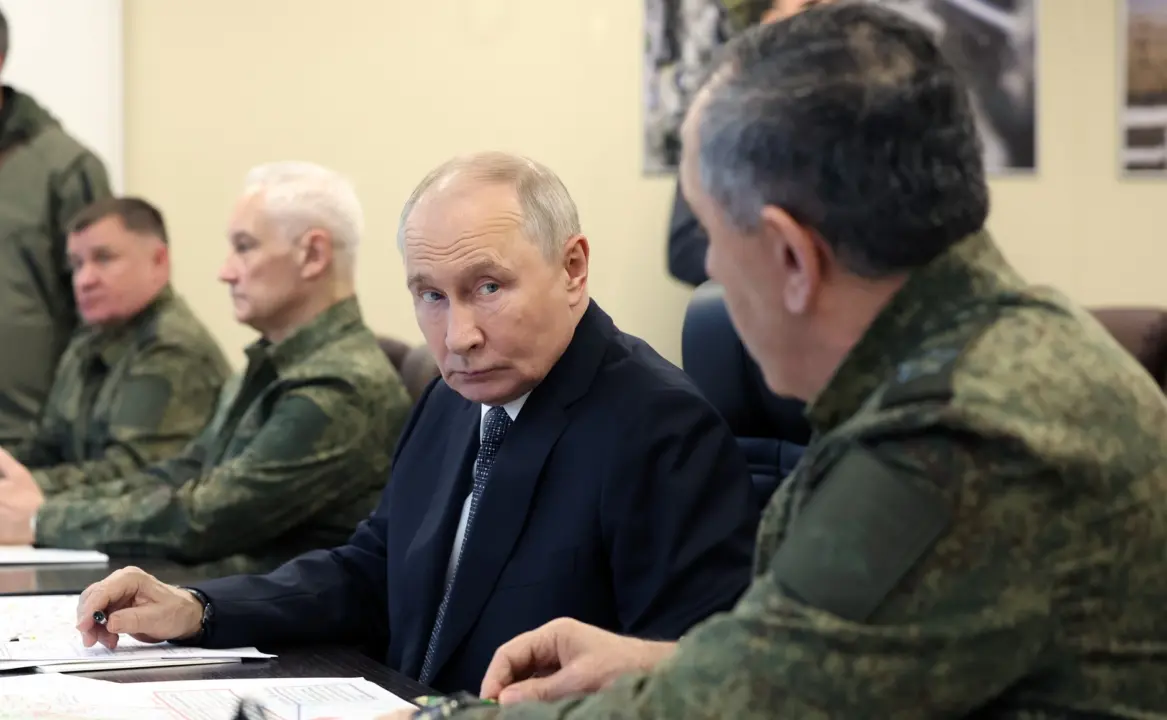
Russia's new Shturm uncrewed tank failed during its public debut at the Tsentr-2026 military exercise in front of President Vladimir Putin. The vehicle repeatedly lost command-and-control radio links with its command post during the demonstration. This failure highlights the critical dependency of remote-controlled military hardware on reliable communication infrastructure. Buyers and military planners should note that current line-of-sight radio ranges may not support effective battlefield operations.
Remote control failures force manual override during Tsentr-2026 exercise
Uralvagonzavod built the Shturm on modified Soviet-era T-72 and T-90 tank chassis. The vehicle carries a shortened 125mm D-414 main gun as its primary armament. It operates via a radio link with a range of approximately 3 kilometers. The design allows for alternative configurations, including twin 30mm 2A42 automatic cannons or thermobaric rocket launchers.
Specifications
- Main Gun: 125mm D-414
- Chassis: Modified Soviet-era T-72 and T-90
- Control Range: Approx. 3 kilometers
- Alternative Armament: Twin 30mm 2A42 automatic cannons and thermobaric rocket launchers
During the drill, the Shturm's command-and-control link failed multiple times. Operators had to switch to a manual human driver to continue the demonstration. Even with manual control, the vehicle got stuck in a muddy ditch. The incident contradicted initial Russian Defense Ministry claims that the vehicle provided successful fire support.
A Russian armor expert criticized the Shturm's reliance on a command post located 3 to 4 kilometers away in direct line of sight. The expert stated that without proper communications like Starlink, the vehicle has no point. The design also lacks adequate protection for the engine and turret. These factors contribute to the vehicle's operational vulnerability in combat scenarios.
Discussion
0 comments
Log in to join the thread with a thoughtful take, question, or correction.