
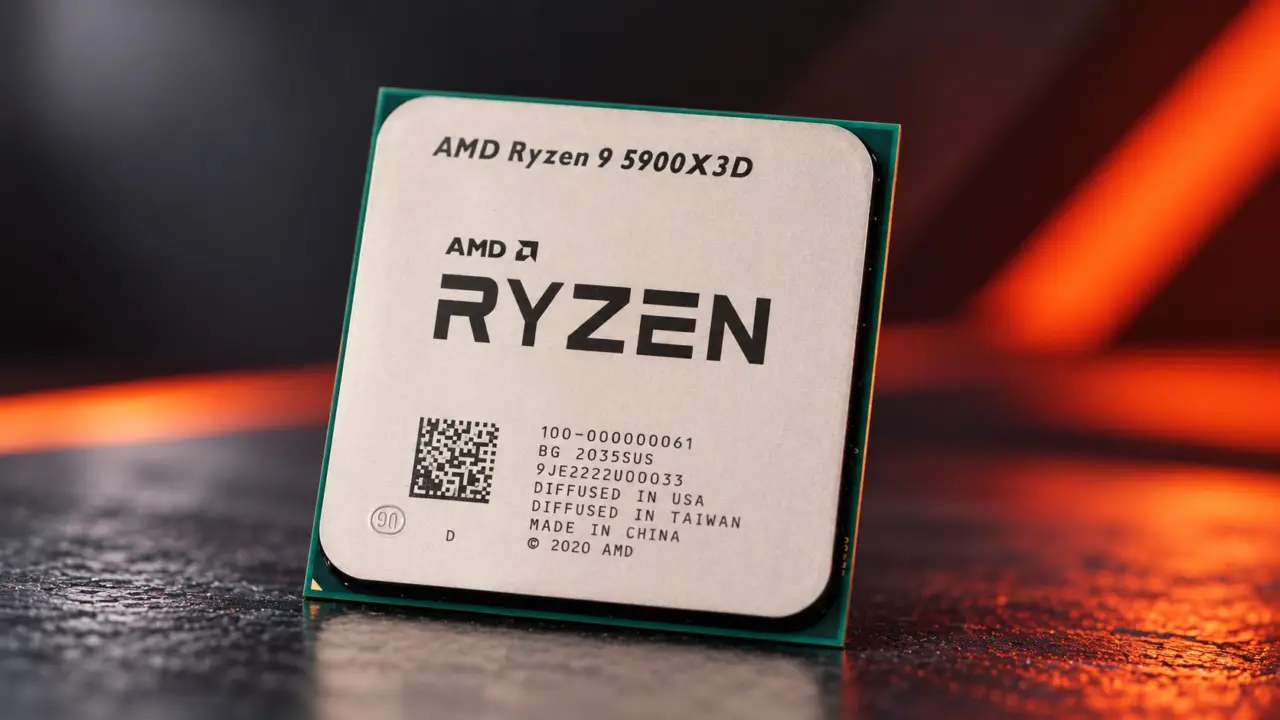
An unreleased early engineering sample of the AMD Ryzen 9 5900X3D has surfaced online, offering a glimpse into a variant that never reached the market. This leak matters because it reveals a different architectural approach to AMD's 3D V-Cache technology, specifically how the company balanced cache capacity against boost clock speeds. Buyers interested in the history of AMD's high-end gaming processors can see how design choices shifted before the final products launched.
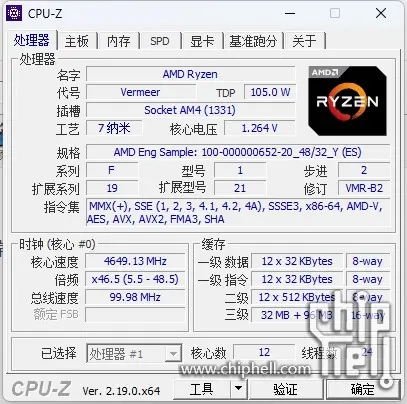
Leaked engineering sample reveals single chiplet design and higher clock speeds
The processor carries a 12-core and 24-thread configuration, which matches the standard specifications for this tier of AMD's Zen 3 lineup. Unlike previous leaked samples of the 5900X3D that featured a dual-CCD setup with 192 MB of L3 cache, this sample uses a single 3D V-Cache chiplet. This results in a total L3 cache of 128 MB, split into a 32 MB and 96 MB configuration.
Specifications
- L3 Cache: 128 MB
- Core/Thread Count: 12-core/24-thread
- Boost Clock: 4.65 GHz
- Max Boost Clock: 4.73 GHz
- L3 Cache Configuration: 32 MB + 96 MB
Benchmarking tools have captured the chip running at significantly higher clock speeds than the dual-cache variant. CPU-Z records a boost clock of 4.65 GHz, while another tool shows the processor hitting 4.73 GHz. This performance ceiling stands in contrast to the dual-cache version, which reportedly topped out around 4.4 GHz. The higher clocks suggest AMD prioritized frequency over maximum cache density for this specific engineering sample.
This sample appears to be a more mature version of the chip, likely representing the model AMD was preparing for an official launch at the time. The 5900X3D and its sibling, the 5950X3D, were originally planned for release but were ultimately cancelled in favor of the Ryzen 7 and 5 series X3D chips. We previously covered the Ryzen 9 9950X3D Hits $569 in our earlier AMD coverage, highlighting the current state of the brand's high-end offerings. The existence of this unreleased sample confirms that AMD explored multiple cache configurations before settling on the final product strategy.

Discussion
0 comments
Log in to join the thread with a thoughtful take, question, or correction.