
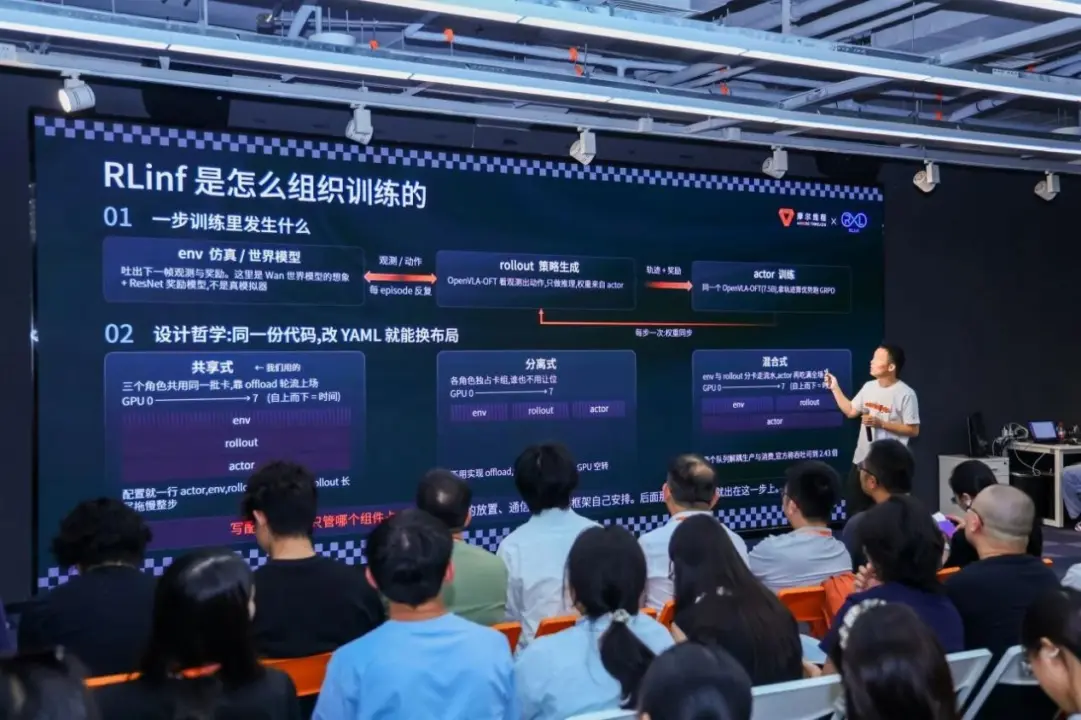
Moore Threads released performance data for its MTT S5000 GPU in embodied intelligence tasks, showing results that closely track international mainstream competitors. This matters because it demonstrates that domestic silicon can handle the complex, dual demands of AI training and 3D simulation without falling behind global standards. Buyers in the robotics and simulation sectors now have evidence that local hardware can support high-fidelity reinforcement learning workflows.
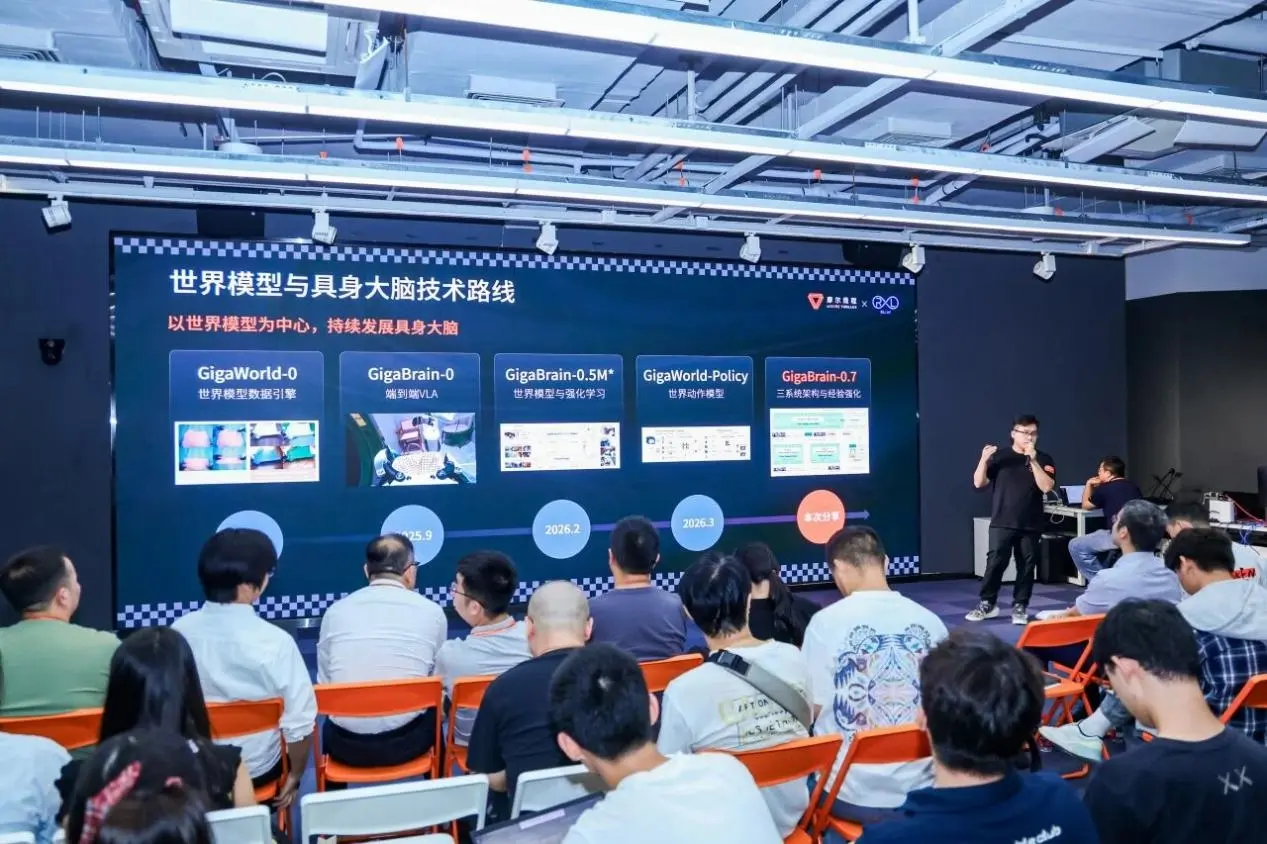
Engineering tweaks cut training step time by 26 percent and idle rates drop sharply
The company focused its testing on reinforcement learning frameworks, specifically integrating the MTT S5000 into the RLinf framework starting with version 0.3. Yang Shanshan, senior vice president at Moore Threads, noted that embodied intelligence requires a composite computing approach that combines AI brain training with rendering and simulation power. The vendor positioned the S5000 as one of the few domestic partners capable of providing mature support for the rendering link alongside international GPU vendors.
- Training Curve Correlation: r=0.976
- Step Time Reduction: 2549s to 1888s (26% decrease)
- GPU Idle Rate: 18.5% to 3.1%
- GEMM and Attention Performance: 1.6 to 2 times international mainstream GPUs
- Real Machine Success Rate: 92%
Engineering optimizations drove significant efficiency gains in the testing environment. Moore Threads migrated image processing to the GPU, merged noise check loops, and replaced Python scalars with device tensors. These changes reduced single-step time from 2549 seconds to 1888 seconds, a 26 percent decrease. The GPU idle rate also dropped sharply from 18.5 percent to just 3.1 percent, indicating much tighter resource utilization during active training.
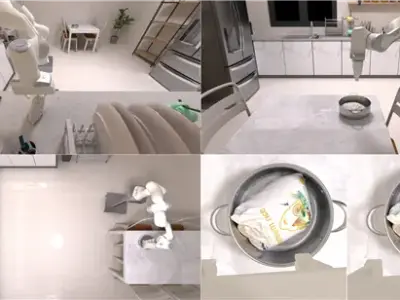
Performance benchmarks showed the S5000 achieving GEMM and attention performance levels 1.6 to 2 times that of international mainstream GPUs. Training curves matched those of competitor hardware with a correlation coefficient of 0.976 under controlled variables. In real-world dual-arm robot assembly tasks, the system achieved a 92 percent success rate. Fine operation time shortened by 39.5 percent compared to baseline metrics.
Yu Chao from Tsinghua University Shenzhen International Graduate School highlighted the rarity of domestic solutions offering mature rendering support. The data confirms that the MTT S5000 can stabilize complex robotic tasks while maintaining high computational throughput. We looked at MTT S5000 GPU Supports earlier while tracking Moore Threads launches.
The release establishes a clear performance baseline for the MTT S5000 in embodied AI applications. The hardware now has verified metrics for step time reduction, idle rate management, and real machine success rates.
Discussion
0 comments
Log in to join the thread with a thoughtful take, question, or correction.