
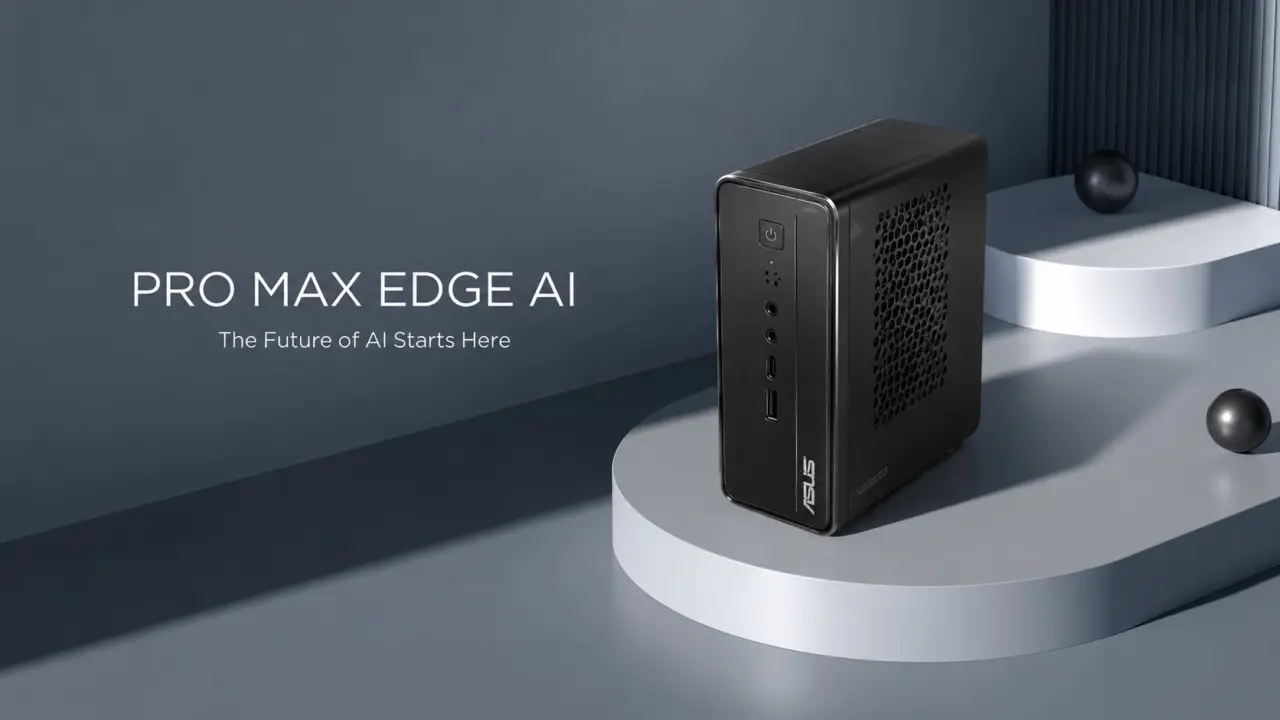
MSI has introduced the PRO MAX EDGE AI+, a compact desktop built specifically for local artificial intelligence workloads. This release matters because it brings high-end AI compute power into a footprint small enough for standard desks without requiring server infrastructure. Users who need to run large language models locally now have a dedicated hardware option that fits in a 4-liter chassis.
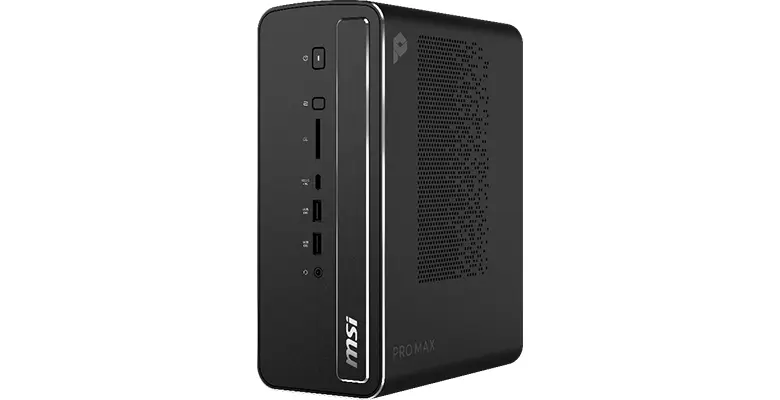
Compact desktop targets local AI workloads with Ryzen AI Max+ 395
The system centers on the AMD Ryzen AI Max+ 395 processor, which MSI equips with up to 16 cores and 32 threads. This chip provides a combined 126 TOPS of AI performance, drawing 50 TOPS directly from its built-in XDNA 2 NPU. Integrated Radeon 8060S graphics with 40 Compute Units handle visual tasks alongside the AI processing units.
Specifications
- Processor: AMD Ryzen AI Max+ 395
- AI Performance: 126 TOPS combined
- Memory: Up to 128 GB LPDDR5-8000
- Graphics: Radeon 8060S integrated
- Chassis Size: 4 liters
Memory capacity reaches up to 128 GB of LPDDR5-8000 unified memory to support heavy data loads. MSI pairs this with Frozr AI Pro cooling and MSI Glacier Armor to maintain thermal stability under sustained AI workloads. The compact design allows these components to operate within a significantly smaller volume than traditional desktop towers.
Single units can manage Large Language Models with up to 120 billion parameters. When users connect multiple PRO MAX EDGE AI+ devices in a cluster, the system scales to handle models with up to 670 billion parameters. This clustering capability allows organizations to expand AI capacity without migrating to external cloud services.
The PRO MAX EDGE AI+ represents a shift toward localized AI inference on consumer-grade hardware. It combines high-core-count processors with substantial unified memory to support complex model execution. This configuration offers a practical alternative for developers and enterprises testing large models on-premise.

Discussion
0 comments
Log in to join the thread with a thoughtful take, question, or correction.