
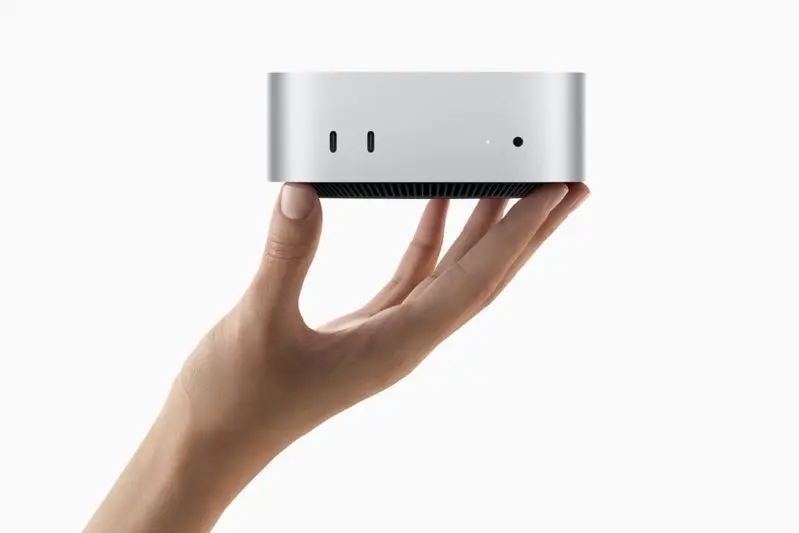
Apple is positioning its Mac mini and Mac Studio as dedicated edge AI servers for users who want to run large language models locally. This shift matters because it allows developers and enthusiasts to keep sensitive data on their own hardware while avoiding the recurring costs of cloud inference. The strategy targets a specific need for isolated, always-on computing environments that operate independently from primary workstations.
Apple executive highlights SoC integration for continuous edge computing
Doug Brooks, an Apple executive, argues that the industry must move beyond relying solely on discrete graphics cards for artificial intelligence tasks. He states that AI agents require the entire System on a Chip (SoC) to work in unison rather than treating processing as a GPU-only problem. This holistic approach leverages the integrated CPU, GPU, and Neural Engine to handle complex workloads more efficiently.
The Mac mini supports Unified Memory Architecture configurations of up to 64GB or 128GB, which eliminates the need for VRAM data replication found in traditional PC architectures. This memory design allows the system to run large AI models directly without the overhead of copying data between separate memory pools. The small form factor combined with low power consumption makes these machines ideal for continuous operation in home or office settings.
Users seeking this setup want to fully control their systems while keeping them physically separate from their main daily drivers like MacBooks. Brooks notes that this separation allows for 24/7 operation without disrupting the primary computing environment. The Mac mini fills this niche by providing a compact, energy-efficient node for edge computing tasks that require constant availability.
Apple is directing attention to the technical advantages of its silicon integration for the growing market of on-device AI processing. The focus remains on how SoC architecture and unified memory enable efficient, private, and cost-effective local model execution. This positioning establishes the Mac mini as a viable hardware solution for dedicated AI agent workloads.
Discussion
0 comments
Log in to join the thread with a thoughtful take, question, or correction.