

MSI has released a BIOS update that unlocks higher memory speeds for AMD desktops using domestic DDR5 chips, giving PC builders a direct path to faster RAM without buying new hardware. This matters because it removes the artificial speed cap that previously held back affordable memory modules, allowing users to extract more performance from existing parts. The update targets a specific type of memory chip made by ChangXin Memory Technologies, or CXMT, which has historically struggled to match the speeds of Western competitors on AMD platforms.
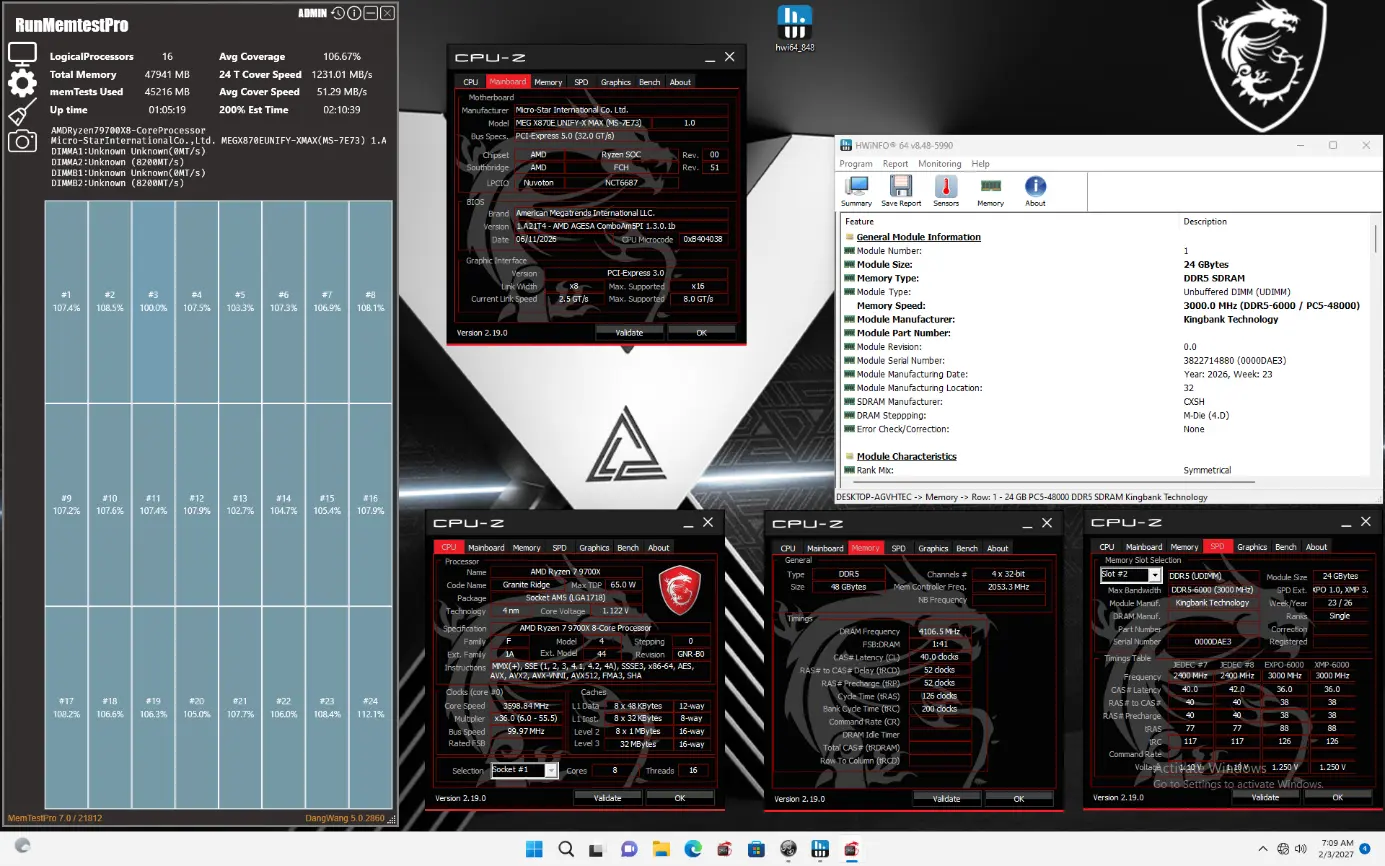
New BIOS allows retail CXMT modules to run at significantly higher frequencies
The core of this update is a "Player Edition" BIOS that MSI has made available for download on selected AMD motherboards. This software change allows standard retail modules from brands like KingBank and Lexar to run at significantly higher frequencies than before. Users do not need to seek out specially binned or premium-grade chips to benefit from this change, as the update works with widely available retail stock. This approach lowers the barrier for enthusiasts who want to push their systems beyond standard speeds without spending extra money on high-end memory kits.
Supported Frequencies
- 16Gbit CXMT on 2-slot boards: DDR5-8000
- 24Gbit CXMT on 2-slot boards: DDR5-8200
- CXMT on 4-slot mainstream boards: DDR5-7200
MSI claims that the new BIOS enables 16-gigabit CXMT chips to run stably at DDR5-8000 on motherboards with two memory slots. For motherboards with four memory slots, the stable frequency limit rises to DDR5-7200. If the system uses the newer 24-gigabit CXMT chips, the update supports speeds up to DDR5-8200 on two-slot boards. These figures represent a significant jump from the previous AMD platform cap of DDR5-6800 for these specific domestic chips. MSI verified these speeds using 100% coverage MemTest stress tests to ensure stability.
The update effectively breaks the long-standing frequency barrier for domestic memory chips on AMD platforms. MSI stated that they have completed deep adaptation and tuning for CXMT chips, allowing them to operate stably between DDR5-8000 and DDR5-8200. This means that owners of compatible AMD motherboards can now access these higher speeds directly through a BIOS download. The company has already opened the Player Edition BIOS for download for the first batch of adapted models, though specific motherboard model numbers were not listed in the initial announcement.
We looked at the last DDR5 Memory update while tracking domestic chip advancements, and several of the same balance and stability themes came up. MSI has confirmed that standard retail CXMT modules can now run at these higher speeds without requiring special binning or replacement. This update provides a practical way for AMD users to improve system performance using existing hardware components. The BIOS is now available for download, marking the first time these specific domestic chips have reached these speeds on AMD desktops.


Discussion
0 comments
Log in to join the thread with a thoughtful take, question, or correction.