
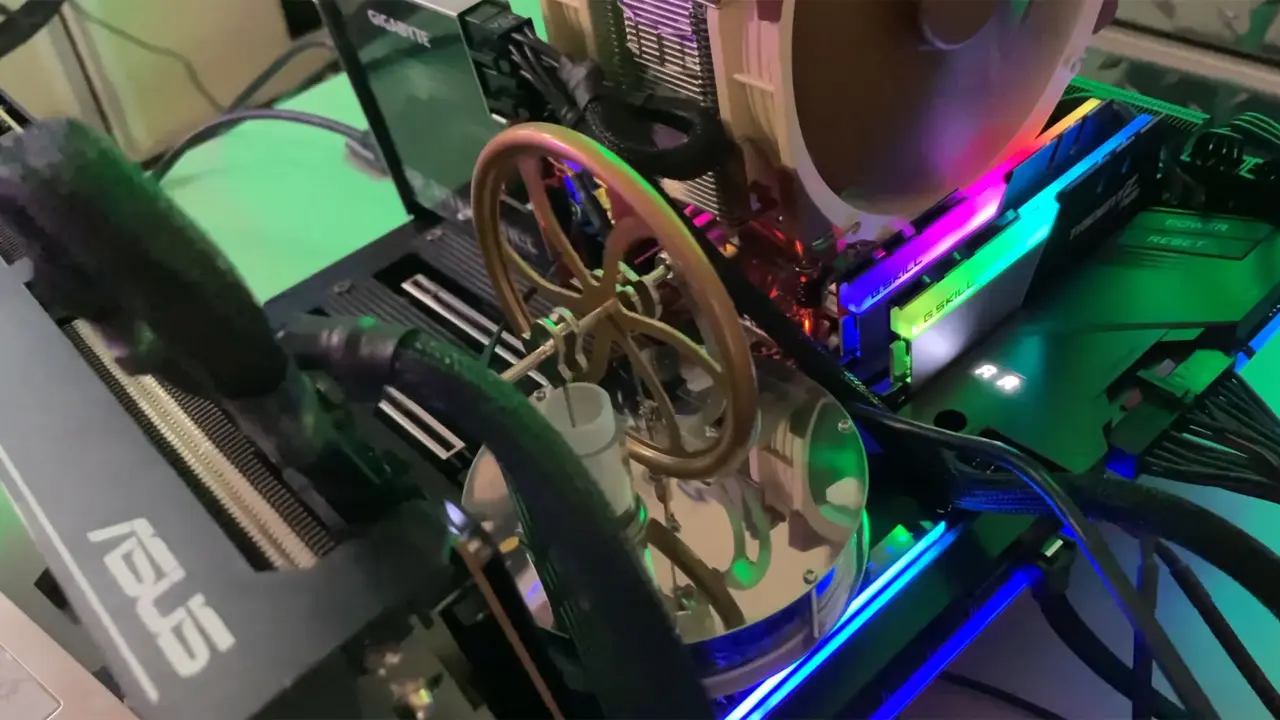
Windows developer Dave W. Plummer recently demonstrated an unconventional approach to thermal management for high-performance computing. He attached a 19th-century Stirling Engine to his AMD Threadripper 3970X system to show how waste heat can drive mechanical motion. This experiment highlights a niche intersection of legacy thermodynamics and modern silicon cooling, even if it offers no practical solution for overheating chips.
Experimental setup converts thermal energy into kinetic motion
The core of the demonstration relies on the Sunnytech LT001 Stirling Engine, a device typically marketed as an educational toy kit. Plummer positioned the engine so that heat from the chipset warmed the engine's cylinder, causing the internal gas to expand. This expansion drives a piston that spins a flywheel, converting thermal energy directly into kinetic energy without external power.
Specifications
- Product Model: LT001
- Price: $39.99
- RPM: 200 RPM
- CPU: AMD Threadripper 3970X
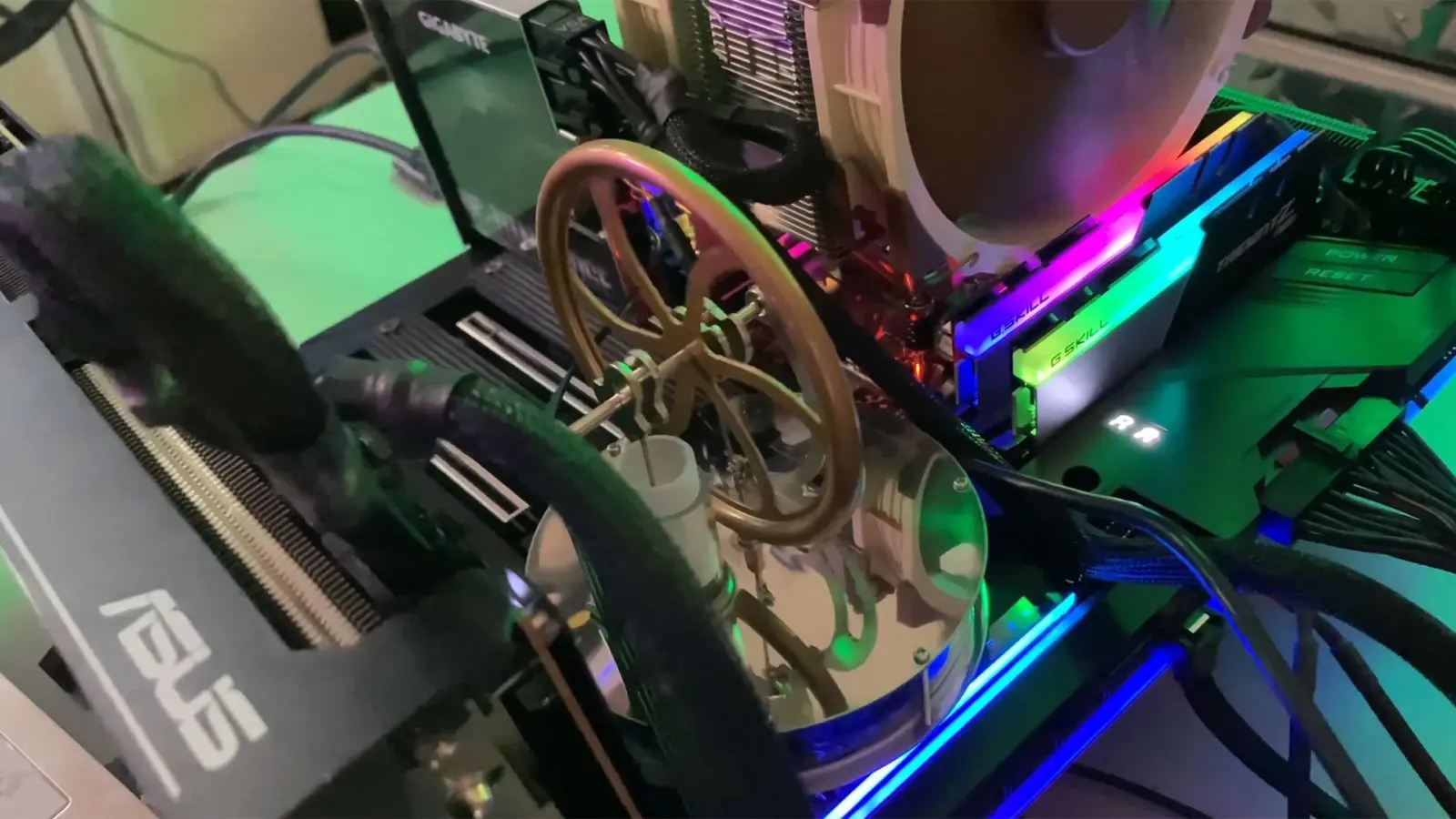
The specific Sunnytech LT001 model spins its flywheel at approximately 200 RPM when activated by sufficient heat. The unit costs $39.99 on Amazon, making it an accessible component for hobbyists interested in low-temperature heat engines. The engine operates on the principle that temperature differences between a heat source and a heat sink create mechanical work.
Plummer shared images of the setup on social media, stating he was cooling his Threadripper chipset with the engine. However, the demonstration serves primarily as a proof of concept rather than a viable cooling strategy for serious workloads. The setup does not lower temperatures enough to be considered a real solution for chipset overheating, but it does illustrate the physics of Stirling cycles in a modern context.


Discussion
0 comments
Log in to join the thread with a thoughtful take, question, or correction.