
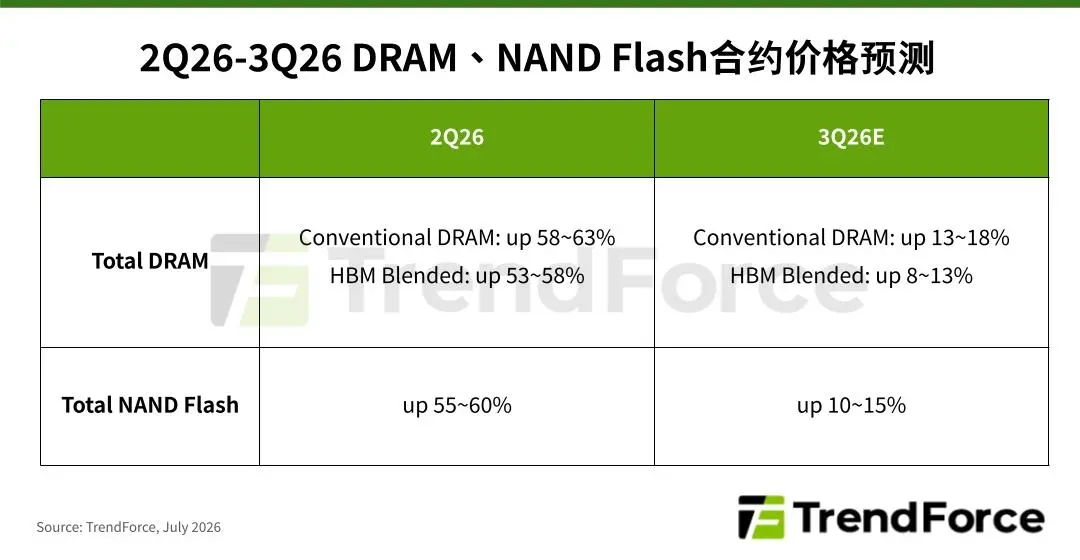
Storage component costs are finally slowing their aggressive climb, offering a potential window for buyers who have been waiting for price stabilization. TrendForce forecasts that DRAM and NAND Flash contract prices will rise by 13 to 18 percent and 10 to 15 percent respectively in the third quarter of 2026. This marks the first time in over a year that quarterly increases have fallen below the 20 percent threshold. The deceleration provides a clearer horizon for consumers and enterprises planning hardware upgrades, even as absolute costs remain elevated.
TrendForce forecasts slower quarterly increases for storage components
The primary engine driving these continued price hikes is the sustained demand from AI servers. Strong shipments in this sector are expected to persist through 2027, keeping supply tight for high-performance memory and storage. Enterprise SSD demand receives additional support from the upcoming NVIDIA Vera Rubin platform shipments. This industrial demand creates a structural constraint that prevents prices from dropping, even as the rate of increase slows.
Consumer markets face a different dynamic characterized by weakening demand. High original equipment manufacturer inventory levels and general price sensitivity are limiting the ability of vendors to push prices higher. This consumer resistance acts as a cap on further aggressive increases, forcing a moderation in the quarterly adjustment pace. The divergence between enterprise strength and consumer weakness defines the current market structure.
The shift from 30 percent quarterly jumps to sub-20 percent increases signals a change in market momentum. Buyers can expect the worst of the inflationary pressure on RAM and SSDs to ease, though costs will not disappear. This moderation allows for more predictable budgeting for system builders and PC purchasers. The trend suggests a stabilization phase rather than a return to pre-inflation pricing levels.
TrendForce data indicates that the storage market is entering a period of moderated growth. The combination of strong AI server demand and weaker consumer interest creates a balanced but still expensive environment. Prices will continue to rise, but at a pace that is more manageable for the broader market. This development offers a practical benefit to those waiting for a dip in component costs.

Discussion
0 comments
Log in to join the thread with a thoughtful take, question, or correction.