
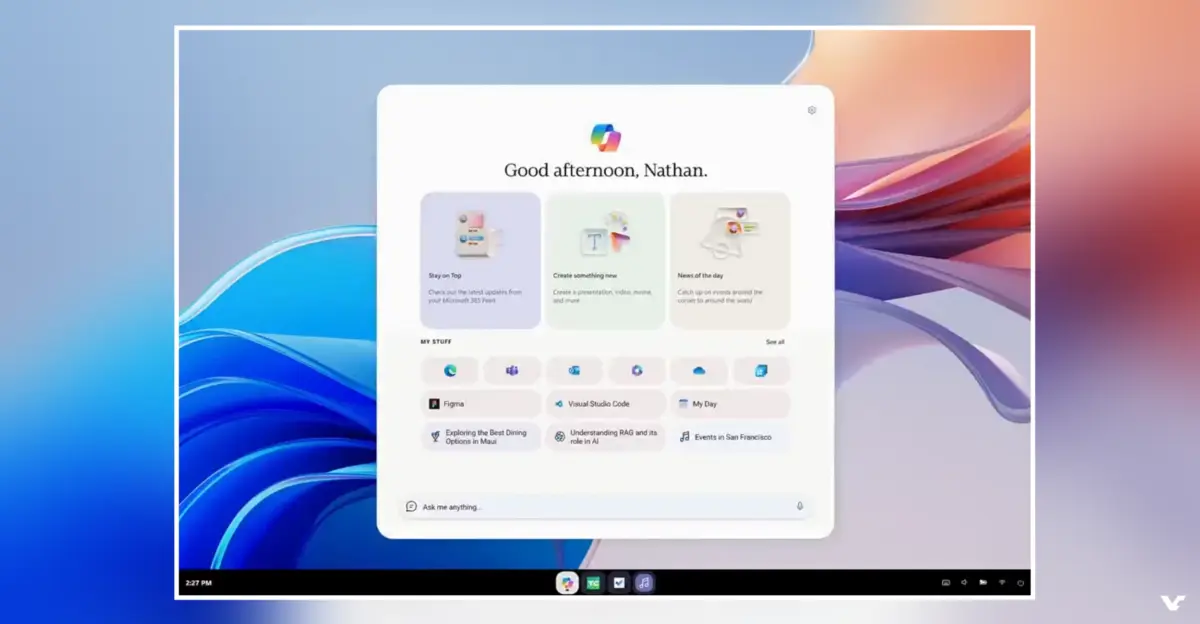
A leaked video from 2024 reveals Microsoft tested an internal operating system concept called Project Aion that replaced local software with web browsing and artificial intelligence. This experiment shows the company once tried to turn personal computers into cloud-dependent terminals, a strategy that ultimately failed due to user resistance against aggressive AI integration. The leak provides context for why Microsoft is now scaling back some of its most controversial Copilot features in recent Windows 11 updates.
Leaked 2024 video shows internal prototype that replaced local software with web browsing and AI
The prototype ran on a stripped-down Windows codebase known as Win3 that excluded native desktop applications entirely. Microsoft built the core interface around the Edge web browser to handle all user interactions. This design forced users to rely on web-based tools or stream full desktop environments through the Windows 365 cloud service. The system treated the local machine primarily as a display for remote or web-based workloads rather than a standalone computing device.
Copilot served as the central hub for the entire user experience, managing file searches, application launches, and web navigation tasks. The interface included a feature called Spaces that allowed users to group specific websites and apps into saved work areas. This structure aimed to streamline workflows by keeping all necessary tools within a single, AI-guided environment. The architecture prioritized cloud connectivity and AI assistance over local processing power and offline capability.
Reports indicate that Project Aion was likely an experimental prototype and Microsoft never intended to ship it to the public. The project highlights the tension between Microsoft's desire to push cloud and AI services and the practical needs of users who require reliable local performance. This abandoned concept explains the company's current caution regarding deep OS-level AI integration in consumer Windows versions.


Discussion
0 comments
Log in to join the thread with a thoughtful take, question, or correction.