
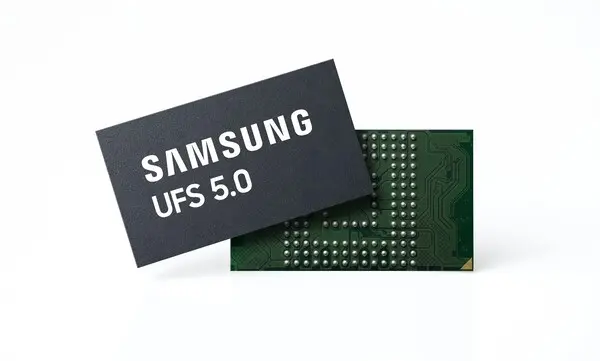
Samsung has introduced UFS 5.0, the latest standard for mobile storage that doubles the data transfer speeds of its predecessor. This leap in performance directly addresses the growing demand for faster processing of large datasets in modern smartphones and XR devices. Users who rely on heavy applications or high-resolution media capture will notice significantly reduced load times and smoother multitasking. The new interface ensures that storage is no longer a bottleneck for the rapid AI computations required by next-generation mobile features.
Samsung UFS 5.0 doubles data transfer speeds while shrinking package size by 16.7 percent
The UFS 5.0 standard relies on Samsung's ninth-generation V-NAND flash technology to achieve its high throughput. This internal architecture allows the storage controller to manage data flow with greater precision and efficiency. By integrating this advanced flash memory, Samsung ensures that the drive can sustain peak speeds without thermal throttling. The technology is designed to meet the rigorous demands of flagship smartphones and extended reality headsets that require consistent high-bandwidth access.
Specifications
- Sequential Read Speed: 10.8GB/s
- Sequential Write Speed: 9.5GB/s
- Energy Efficiency: Over 40% improvement
- Package Dimensions: 7.5mm x 13mm x 0.9mm
- Max Capacity: 1TB
Performance metrics for UFS 5.0 show a sequential read speed of 10.8GB/s and a write speed of 9.5GB/s. These figures represent a doubling of performance compared to the previous UFS 4.1 generation. Samsung has also reduced the physical package size by 16.7 percent, bringing the dimensions down to 7.5mm by 13mm by 0.9mm. This smaller footprint allows device manufacturers more flexibility in designing thinner and more compact mobile devices.
Energy efficiency remains a critical focus, with Samsung claiming an improvement of over 40 percent in power consumption. The company achieved this reduction by introducing clock gating and multi-voltage technologies that lower the energy required for data transfer. The storage solution supports maximum capacities of up to 1TB, providing ample space for extensive libraries and system files. These efficiency gains help extend battery life in devices that frequently access large amounts of data.
Samsung plans to begin mass production of UFS 5.0 in the fourth quarter of 2024. This timeline targets early adoption by manufacturers of high-end smartphones and XR devices. The release marks a significant step forward in mobile storage capabilities, setting a new benchmark for speed and efficiency. Device makers will be able to integrate this standard into their upcoming flagship models to offer superior performance to consumers.


Discussion
0 comments
Log in to join the thread with a thoughtful take, question, or correction.