
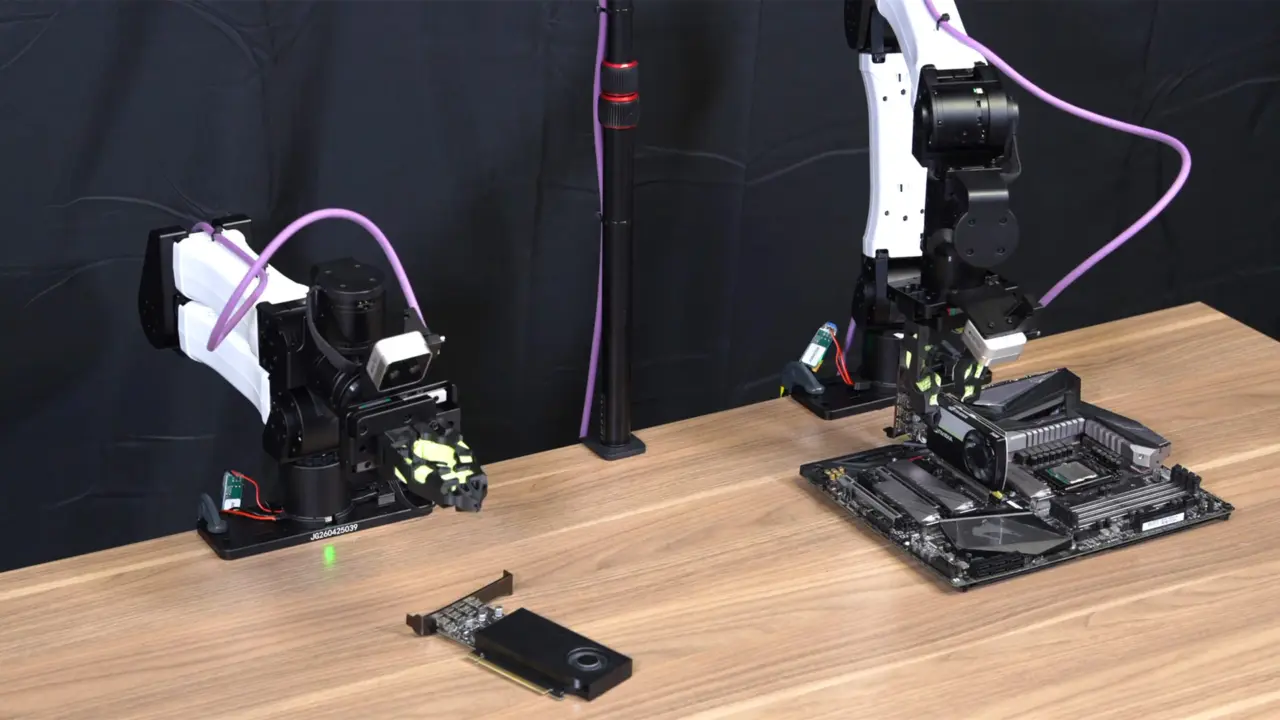
Nvidia demonstrated ENPIRE, an agentic robot framework where artificial intelligence agents like Codex teach themselves to complete physical tasks without human guidance. The system successfully installed graphics processing units into motherboards, sorted metal pins, and manipulated zip ties during recent testing. This research highlights a shift toward autonomous hardware assembly using self-improving AI models.
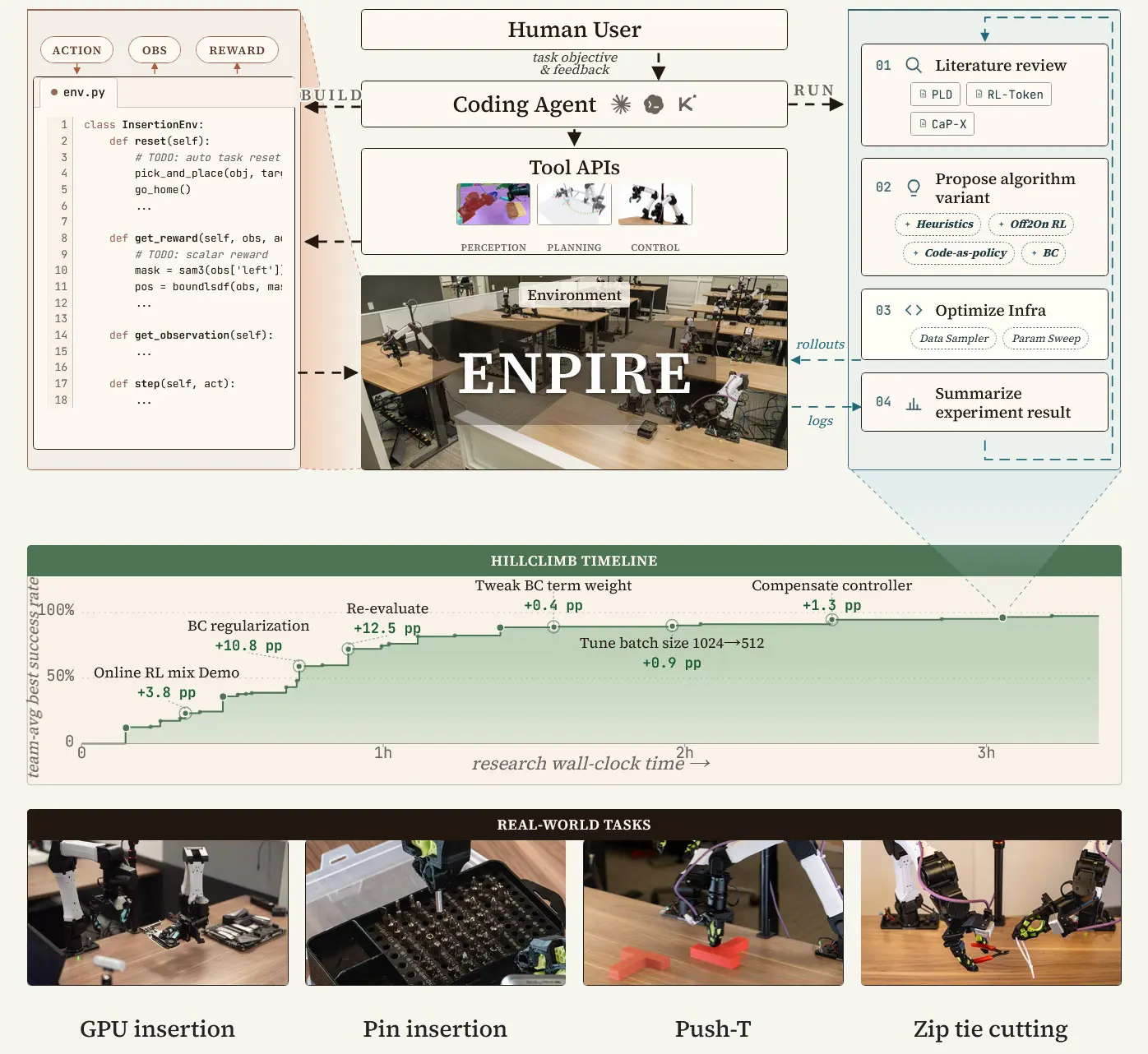
Autonomous agents install GPUs and sort pins without human intervention
The ENPIRE project relies on four core modules: Environment, Policy Improvement, Rollout, and Evolution. These components work together to allow the robots to learn from their mistakes and refine their movements over time. The framework enables the agents to develop new strategies for complex manipulation tasks independently.
Testing focused on scaling the robot fleet to evaluate performance improvements across different group sizes. Researchers found that expanding the fleet to eight autonomous agents significantly reduced the time required to complete assembly tasks compared to smaller groups. This scaling capability suggests a pathway toward more efficient, large-scale manufacturing processes.
Nvidia used this demonstration to showcase how AI-driven robotics can handle high-precision hardware operations. The company aims to prove that self-teaching models can replace manual intervention in sensitive electronic assembly workflows.

Discussion
0 comments
Log in to join the thread with a thoughtful take, question, or correction.