
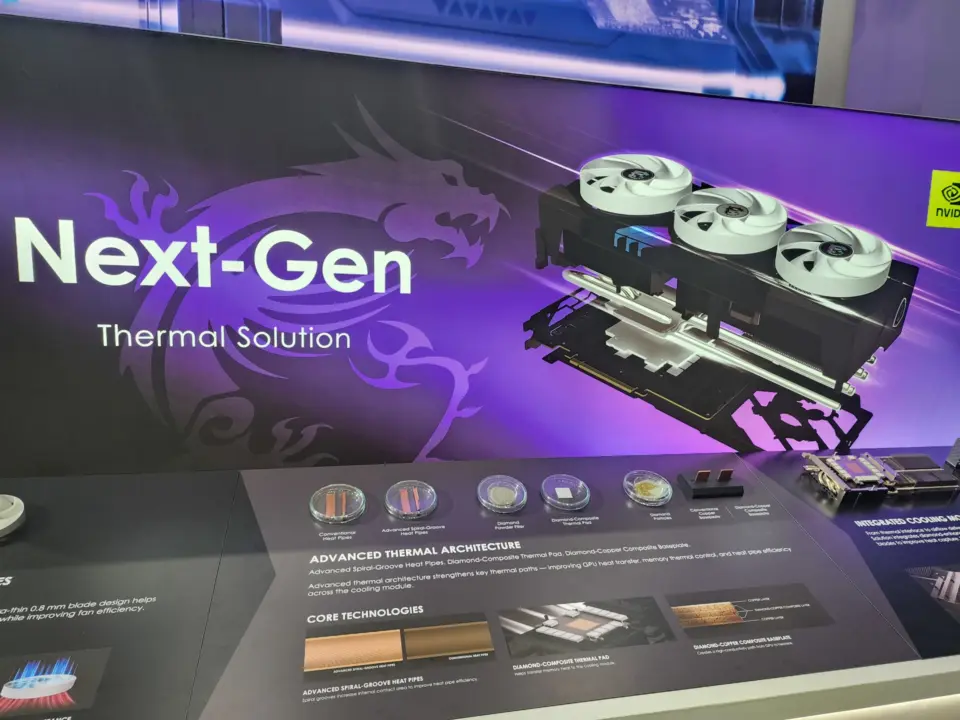
MSI is showcasing next-generation cooling and power delivery technologies designed for future NVIDIA RTX graphics cards, marking a shift toward more integrated electrical safety and advanced thermal management. The company demonstrated these innovations on an existing RTX 5090 32 GB prototype platform to illustrate how the components will function in high-end gaming hardware.
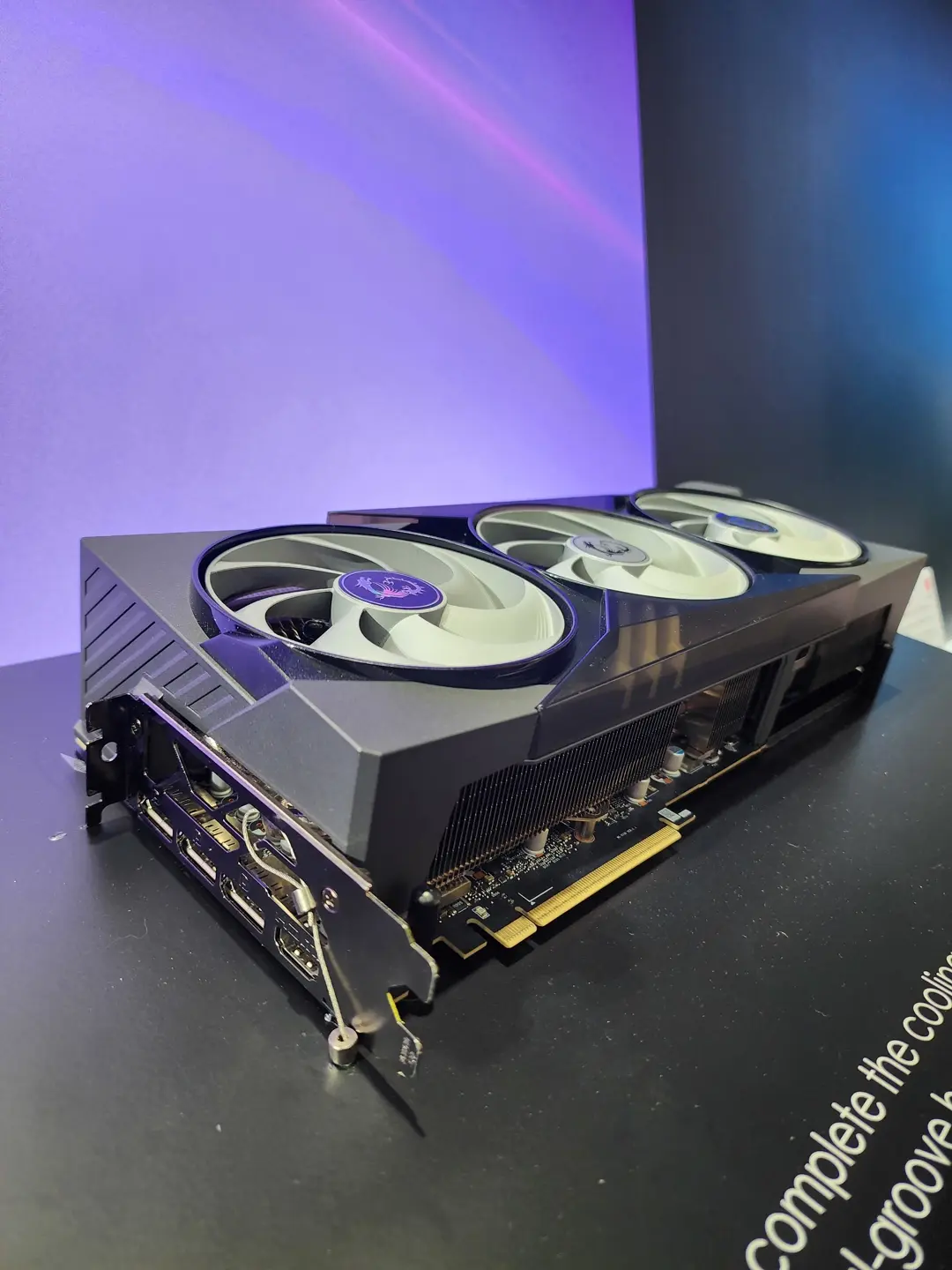
MSI demonstrates advanced thermal management and integrated power safety on an RTX 5090 prototype platform.
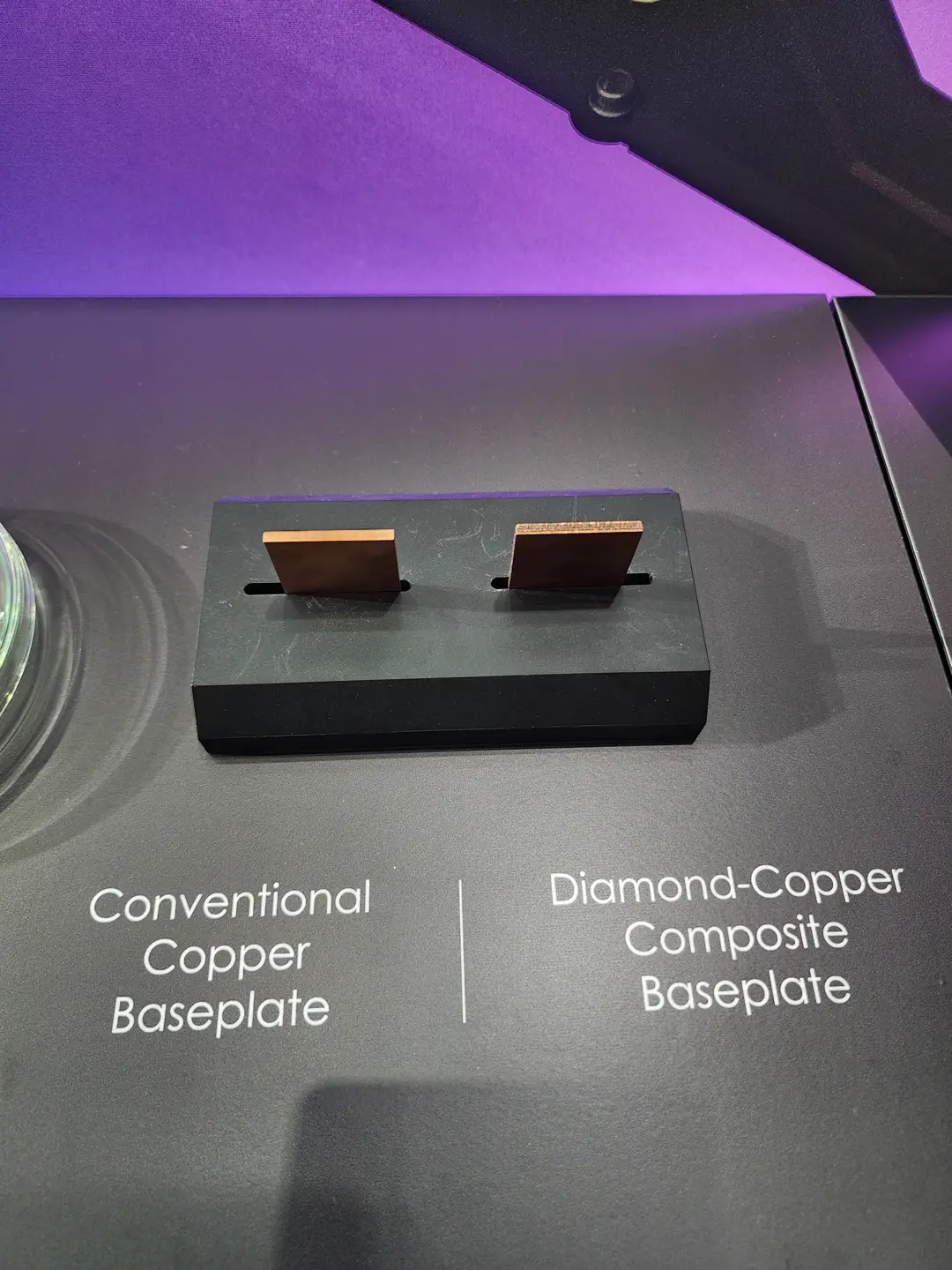
The cooling architecture relies heavily on composite materials and precision engineering to maximize heat dissipation within a compact form factor. MSI utilizes diamond-composite thermal pads paired with a diamond-copper composite baseplate to improve thermal conductivity across critical surfaces. The diamond-composite thermal pads and copper baseplates manage the intense thermal loads anticipated from upcoming graphics processor units.
- Cooling Technology: Diamond-Composite Thermal Pad, Diamond-Copper Composite Baseplate, Ultra-Thin Metal Fan Blades (0.8mm), Advanced Spiral-Groove Heat Pipes
- Power Delivery & Safety: Safe 16-Pin connector with Safeguard tech, Resettable eFuse (200ns short-circuit response)
- Prototype Platform: Showcased on an existing RTX 5090 32 GB GPU
A key physical change involves the fan design, which features ultra-thin metal blades measuring just 0.8mm in thickness. This reduced blade profile is combined with a high-rigidity structural frame to maintain durability while allowing for greater air movement. MSI claims this specific configuration delivers up to 40% better airflow compared to previous designs.
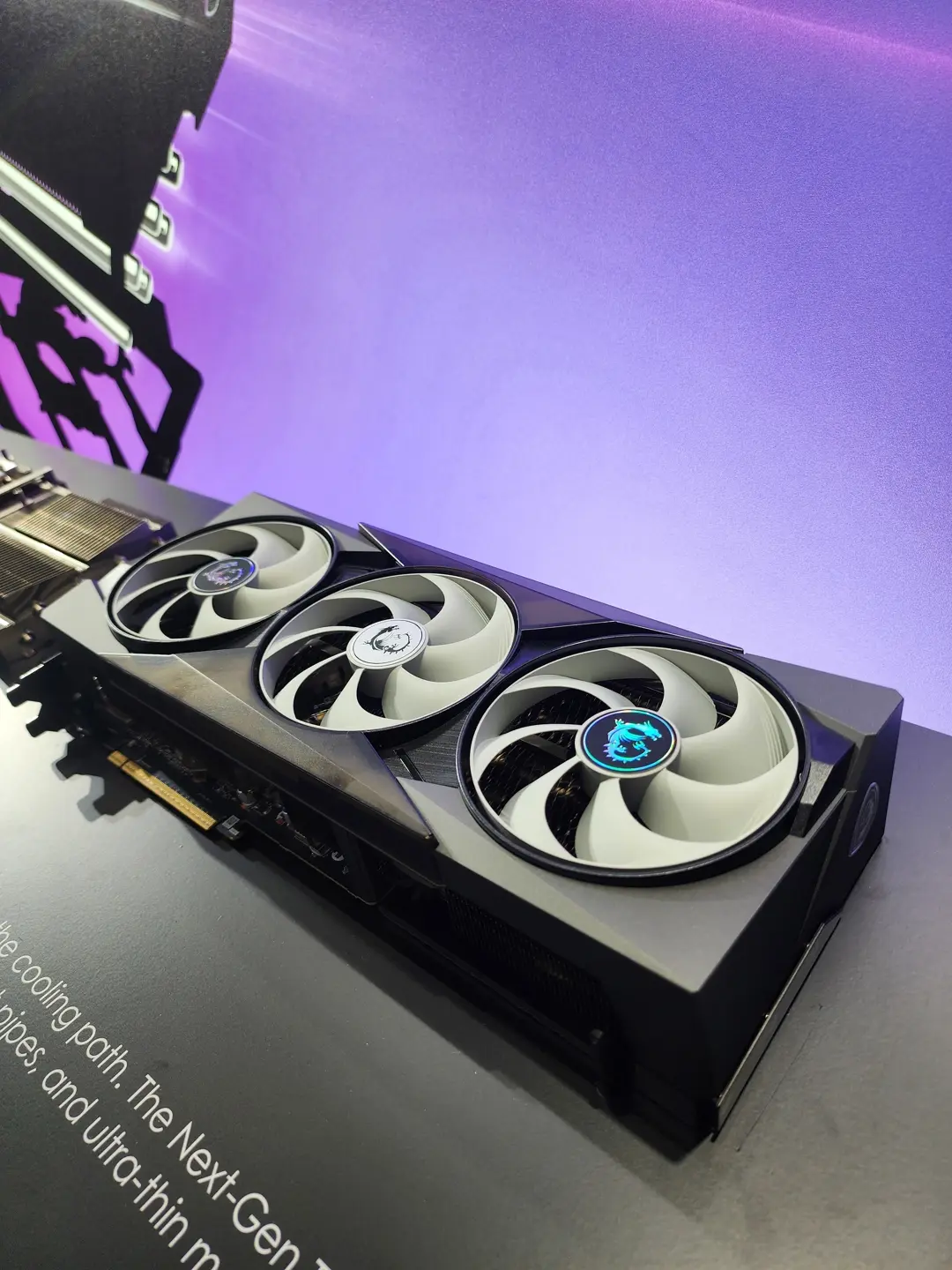
Heat transfer efficiency is further enhanced by advanced spiral-groove heat pipes that increase the contact area between the vapor chamber and the fins. This design aims to improve thermal performance over conventional straight heat pipe implementations found in many current cards. This integrated approach utilizes advanced spiral-groove heat pipes and ultra-thin metal fan blades to optimize thermal dissipation during intensive tasks.
Power delivery safety has been restructured around a 16-pin connector integrated directly with Safeguard technology on the graphics card itself. This approach removes reliance on external power supply unit protections by incorporating resettable eFuses capable of responding to short circuits in approximately 200 nanoseconds. MSI is currently validating this system with additional power supplies and plans to assign it a new official name.
The final implementation of these cooling and power systems will debut alongside NVIDIA’s next-generation GPU lineup, which remains in development. No specific pricing or release dates have been confirmed for the MSI Gaming Trio variant at this time. These innovations introduce resettable eFuses with rapid short-circuit response alongside enhanced cooling architectures for next-generation computing platforms.
Discussion
0 comments
Log in to join the thread with a thoughtful take, question, or correction.