
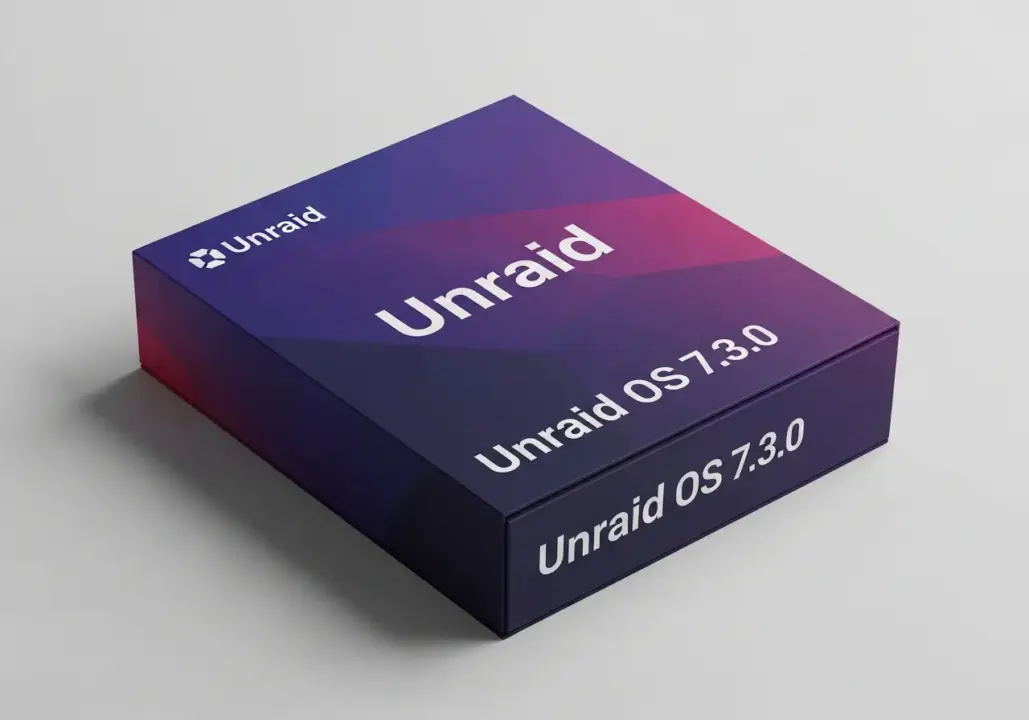
Unraid has released version 7.3.0 of its operating system, introducing significant changes to how the software handles boot devices and licensing. The update arrives alongside critical security patches and updated core components. This release marks a shift away from the previous exclusive reliance on USB flash drives for system booting and licensing.
Docker, ZFS, QEMU, and libvirt receive significant version upgrades.
The new version supports booting from a wider variety of storage media, including external NVMe drives, SSDs, eMMC devices, and existing storage drives. Users can also configure an internal boot setup using a mirrored ZFS pool consisting of two devices. The onboarding process has been redesigned to reduce initial setup time to approximately three minutes.
Under the hood, the operating system updates several key libraries and virtualization tools. Docker has been upgraded to version 29.4.3, replacing the previous 29.3.1 release. The ZFS file system is now at version 2.4.1, while QEMU has moved to 10.2.2 and libvirt to 12.2.0. These updates address specific vulnerabilities, including Copy Fail (CVE-2026-31431) and Dirty Frag (CVE-2025-43284).
Unraid offers three global licensing tiers for the software. The Starter license costs $49 USD, while the Unleashed version is priced at $109 USD. A Lifetime license is available for a one-time payment of $249 USD. Additionally, Amazon currently offers the LincStation S1 hardware bundle with Unraid OS included for $499 USD in the United States.
The LincStation S1 bundle is currently available for purchase in the US market. The software update itself became available globally shortly after the announcement date. Unraid has not confirmed specific details regarding future hardware integrations or additional regional availability for the standalone software licenses.

Discussion
0 comments
Log in to join the thread with a thoughtful take, question, or correction.