
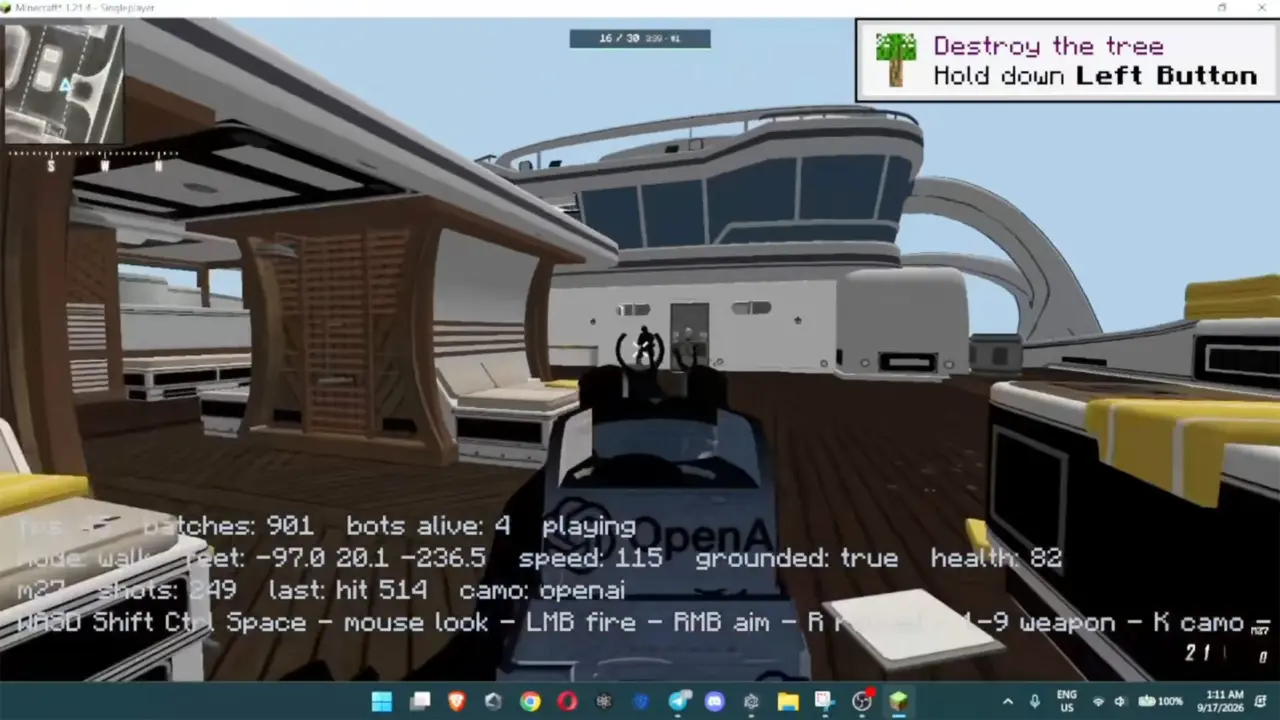
A developer has managed to run a Call of Duty map natively inside Minecraft, proving that the sandbox game can host complex third-party shooters without external emulation. This technical feat matters because it demonstrates that Minecraft's rendering engine can handle high-fidelity, fast-paced action directly through its own context. Players and modders now have a concrete example of how deep game engines can be repurposed for entirely different genres.
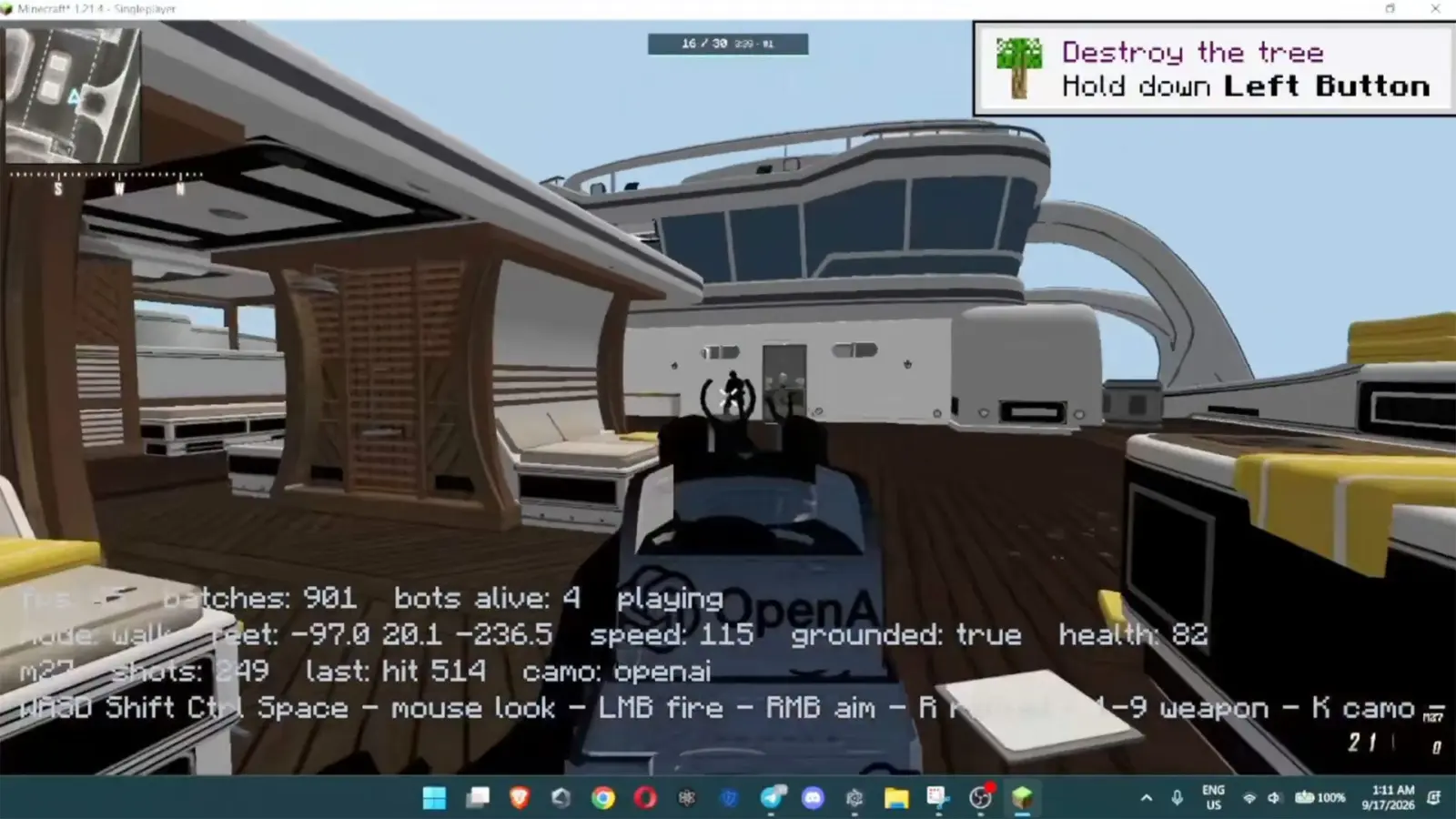
Developer ports Black Ops 2 Hijacked map to run directly on Minecraft's OpenGL context
The project centers on the Hijacked map from Call of Duty: Black Ops 2. Developer Luckey Faraday rebuilt the map's core systems to function within Minecraft's ecosystem. He achieved this by porting the game logic to Java and integrating it as a Fabric mod. The result is a full-screen experience that bypasses browsers or in-game video displays.
The technical implementation relies on Minecraft's native OpenGL context for all rendering. Faraday moved the map geometry, collision detection, bot AI, navigation meshes, and weapon systems into this environment. He utilized the Fabric mod loader to manage these components within the game's codebase. The entire package runs as a single Java application inside Minecraft.
Performance testing shows the map running at approximately 45 frames per second. Video footage confirms the action remains fluid during standard gameplay loops. The development process reportedly involved using an AI tool called GPT-6 Astra to assist with the code reconstruction. The developer utilized an AI tool to convert the original C++ code into Java.
We looked at similar engine-bending experiments earlier while tracking Minecraft modding trends. Faraday's work stands out because it avoids the typical 'video in a window' workaround. The map operates as a native extension of the game world rather than a separate overlay.
This achievement confirms that Minecraft's underlying architecture supports complex, standalone game logic. The 45 fps benchmark provides a clear baseline for future optimization efforts. The project remains a proof-of-concept for native game integration.

Discussion
0 comments
Log in to join the thread with a thoughtful take, question, or correction.