
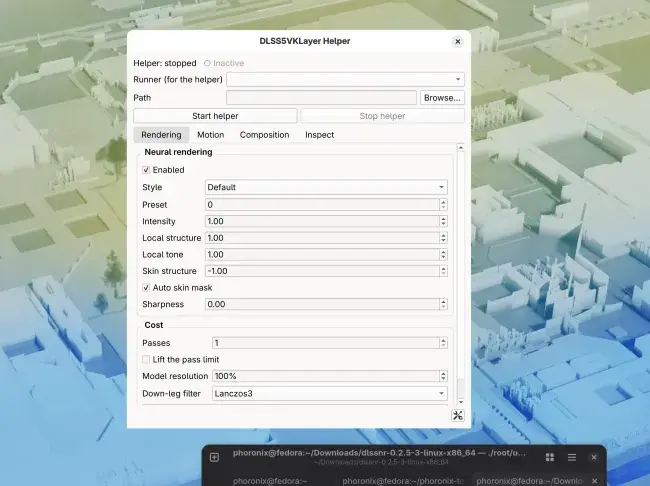
Linux gamers can finally access NVIDIA's latest DLSS 5 neural rendering technology, a shift that expands high-fidelity graphics to non-Windows systems. This open-source bridge allows users to leverage advanced upscaling in both native Linux titles and Windows games running through Steam Play. The release addresses a long-standing gap in Linux gaming performance by bringing proprietary AI features to the desktop environment.
Open-source project enables AI upscaling for Linux and Proton games
The project, named DLSS5VKLayer, functions as a software bridge that translates Linux graphics commands for NVIDIA's Windows-based neural rendering engine. It operates as an implicit Vulkan layer that uses inter-process communication to send rendering frames to Windows NGX DLLs. This architecture enables compatibility with both native Linux applications and Windows games executed via the Proton compatibility layer.
Users must install specific components to make the system work, including NVIDIA GPUs and official proprietary drivers. The setup requires manually extracting key DLL files such as nvngx_dlssnr.dll, nvngx.dll, and nvapi64.dll from NVIDIA Windows software packages. The project does not support Valve's official Proton or Proton Experimental builds because they lack the necessary DXVK-NVAPI stack integration.
To run the software, users need to switch to community-maintained Proton forks like Proton-CachyOS or Proton-GE. These community versions include the required API support that the official Valve builds currently miss. The developer released the project on GitHub on September 9, 2024, making the tool available for global testing and deployment.
Performance and latency metrics relative to Windows native levels remain unverified and require actual testing. The source notes that whether the solution can match Windows performance is still an open question pending real-world benchmarks. This uncertainty means users should expect variable results until independent testing confirms the stability of the neural rendering pipeline.


Discussion
0 comments
Log in to join the thread with a thoughtful take, question, or correction.