
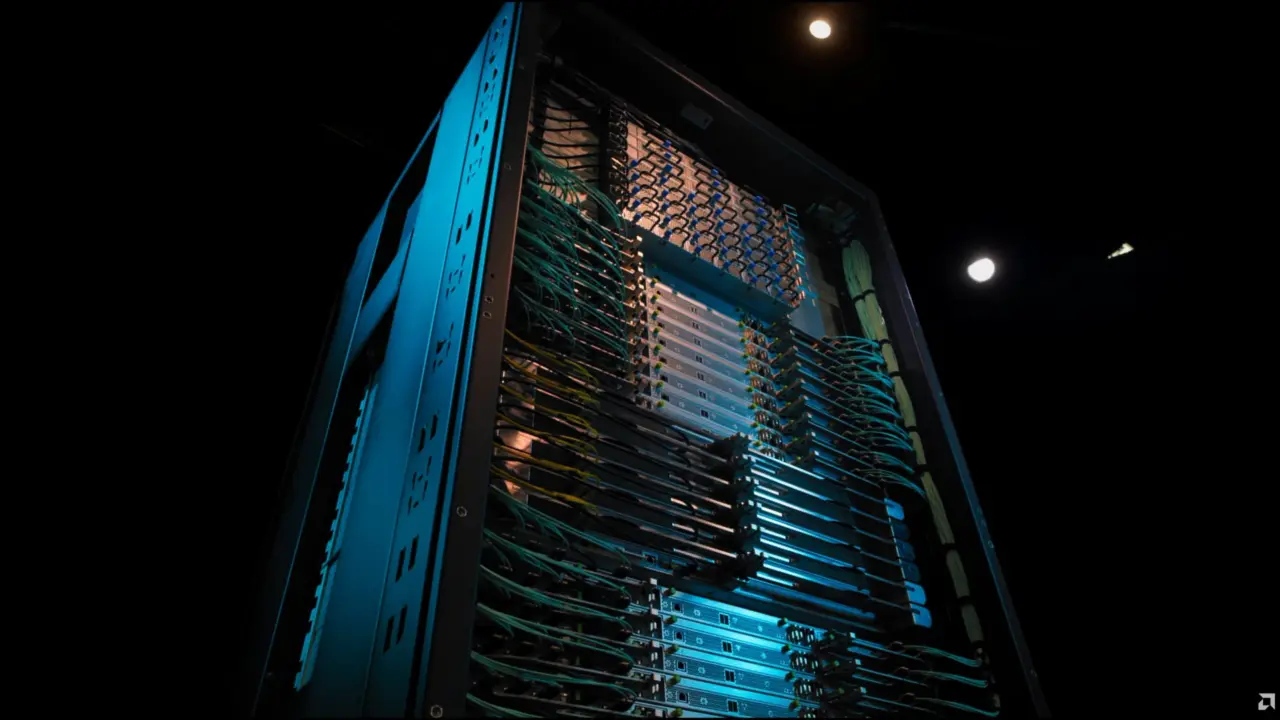
AMD is outlining a dramatic shift in data center efficiency with its 2030 AI rack roadmap, a move that directly impacts operational costs for large-scale AI deployments. The company projects that future hardware will drastically reduce the electricity and carbon footprint required for training and inference workloads. This efficiency leap means operators can scale compute power without a proportional increase in energy infrastructure or environmental impact.
Helios architecture aims for massive density gains and lower power draw
The foundation of this strategy is the Helios rack architecture, which AMD plans to deploy in stages starting in mid-2026. This system integrates AMD Instinct MI455X GPUs with 6th Gen EPYC CPUs and Pensando network interface cards. The design leverages Infinity Fabric and the ROCm software stack to optimize communication between components, aiming for higher throughput per watt.
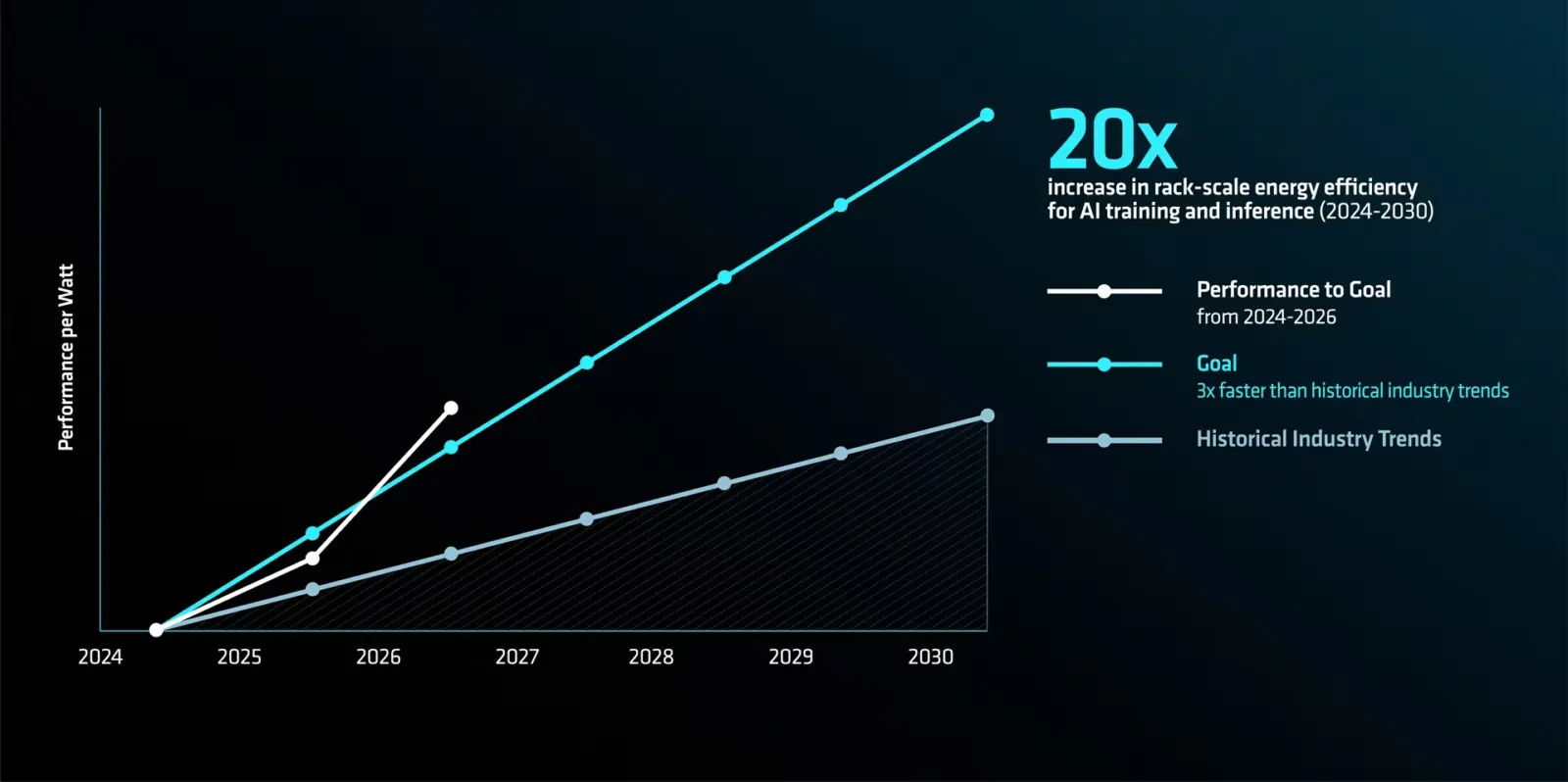
- 2030 Efficiency Goal: 20x increase in rack-scale energy efficiency
- Compute Density Claim: 2 racks in 2030 match 570 racks in 2024
- Carbon Reduction: 28x reduction in carbon intensity
- Mid-2026 Efficiency: 4x increase in AI energy efficiency
- Helios Rack Components: MI455X GPUs, 6th Gen EPYC CPUs, Pensando NICs/DPU, Infinity Fabric, ROCm
AMD claims that by 2030, just two of its new AI racks will deliver the same compute performance as 570 racks of the current MI300X generation. This density increase is supported by an estimated 4x jump in AI energy efficiency by mid-2026, which already exceeds the company's initial 3x target. The 2030 goal targets a 20x reduction in use-phase electricity and a 28x cut in carbon intensity compared to 2024 benchmarks.
These efficiency gains rely on specific technical improvements, including advanced transistor processes, HBM memory proximity, and UALink interconnects. The actual power draw for a 2030 rack is expected to range between 570 KW and 1,781.25 KW, depending on the workload and cooling systems. We looked at AMD's previous efficiency targets while tracking these hardware launches.

Discussion
0 comments
Log in to join the thread with a thoughtful take, question, or correction.