
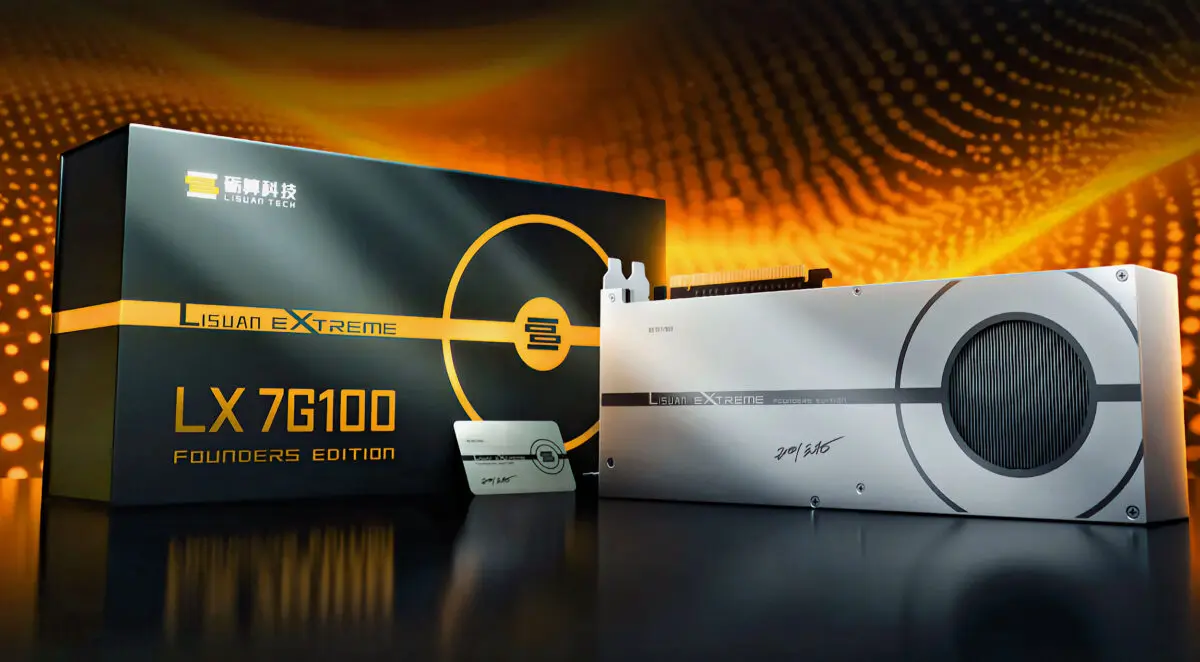
CPU-Z version 2.21 expands hardware detection to include two new graphics processors and a new memory standard. This update helps users identify emerging GPU architectures that were previously unrecognized by the benchmarking tool. The software now supports the Chinese-developed Lisuan LX 7G100 and AMD's entry-level RDNA 4 Radeon RX 9050.
Software update expands hardware detection to include new Chinese and AMD graphics cards
The Lisuan LX 7G100 relies on the company's self-developed TrueGPU architecture and a 6nm manufacturing process. It features 192 texture units and 96 rasterization units for graphics rendering. The card connects via a PCIe 4.0 x16 interface and includes 12GB of GDDR6 memory. It outputs video through four DisplayPort 1.4a connectors.
- CPU-Z Version: 2.21
- Lisuan LX 7G100 Architecture: TrueGPU
- Lisuan LX 7G100 Process: 6nm
- Lisuan LX 7G100 Memory: 12GB GDDR6
- Lisuan LX 7G100 Interface: PCIe 4.0 x16
AMD's Radeon RX 9050 represents the lowest-tier desktop option in the new RDNA 4 lineup. It uses the Navi 44 architecture and contains 16 Compute Units with 1,024 Stream Processors. The GPU operates over a 128-bit memory interface with 8GB of 18 Gbps GDDR6. This configuration targets budget-conscious gamers seeking modern architecture features.
CPU-Z 2.21 introduces support for AMD EXPO-ULL SPD memory profiles. The changelog explicitly lists preliminary support for the Lisuan 7G100 GPU. We looked at the last CPU-Z update while tracking these hardware detection changes. The software does not currently specify which sensor fields it exposes for the new Lisuan chip.
This release confirms that CPU-Z can now identify specific Chinese and AMD entry-level GPUs. Users running these specific hardware configurations will see accurate model names in the tool. The update ensures compatibility with the latest memory profile standards from AMD.

Discussion
0 comments
Log in to join the thread with a thoughtful take, question, or correction.