
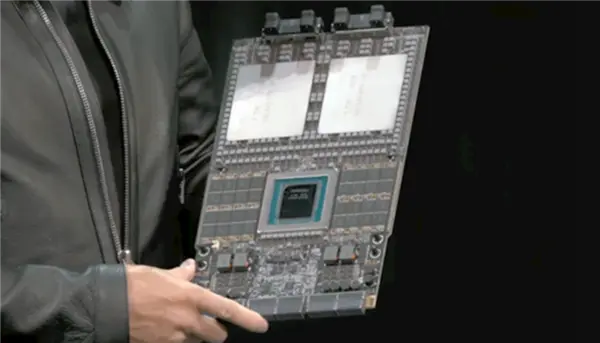
Nvidia's next-generation Vera Rubin AI platform shifts the cost center of high-performance computing from processing power to memory capacity. For data center buyers, this means memory expenses now dominate the bill of materials, fundamentally changing how these systems are priced and budgeted. The Vera Rubin architecture relies on massive memory bandwidth to feed its GPUs, making storage costs the primary financial hurdle for deployment.
UBS bill of materials shows memory is now the most expensive component
The core hardware configuration centers on the NVL72 chassis, which houses 72 Rubin GPUs and 36 Vera CPUs. Each individual Rubin GPU comes equipped with 288GB of HBM4 memory, delivering a memory bandwidth of 22TB/s. This dense packaging allows the entire chassis to hold a total memory capacity of 74.7TB, an amount equivalent to the memory found in 4,500 mainstream smartphones.
Vera Rubin NVL72 Key Specifications
- NVL72 GPU Count: 72
- NVL72 CPU Count: 36
- Rubin GPU HBM4 Memory: 288GB
- Rubin GPU Memory Bandwidth: 22TB/s
- NVL72 Total Memory Capacity: 74.7TB
Cost analysis reveals that memory has become the most expensive component of the Vera Rubin platform. A single Vera Rubin superchip module costs approximately $38,902, with memory-related expenses accounting for $24,297 of that total. In contrast, the Vera CPU core itself is estimated to cost only $704 when excluding the expensive SOCAMM2 memory modules. This structure highlights how the value of the system is heavily weighted toward data storage rather than the processing cores.
The financial impact of this architecture is significant compared to previous generations. Memory costs have increased by 2.5 times, while the total system cost has risen by 2.1 times relative to the Grace Blackwell system. Consequently, the share of memory in the total cost has jumped from 53% in the Grace Blackwell era to 62% in the Vera Rubin platform. This shift confirms that memory is no longer just a supporting component but the central cost driver for next-gen AI infrastructure.
We looked at NVIDIA Rubin Ultra HBM Downgrade in our earlier Nvidia coverage. The Vera Rubin platform confirms that high-bandwidth memory remains the critical bottleneck and expense for AI hardware scaling. Buyers should expect memory pricing to dictate the overall affordability of these systems as the industry moves forward.
Discussion
0 comments
Log in to join the thread with a thoughtful take, question, or correction.